Your cart is currently empty!

Tracing the Sky celebrates the wetlands of Chile and Australia through a shared language of movement. Migratory birds cross oceans and continents in search of safe breeding and feeding grounds. They embody freedom, resilience and the quiet act of crossing boundaries. Like these birds, people also migrate, seeking safety, opportunity or simply the possibility of a different life. Every journey carries risk, memory and hope. Every crossing is an act of carrying something forward.
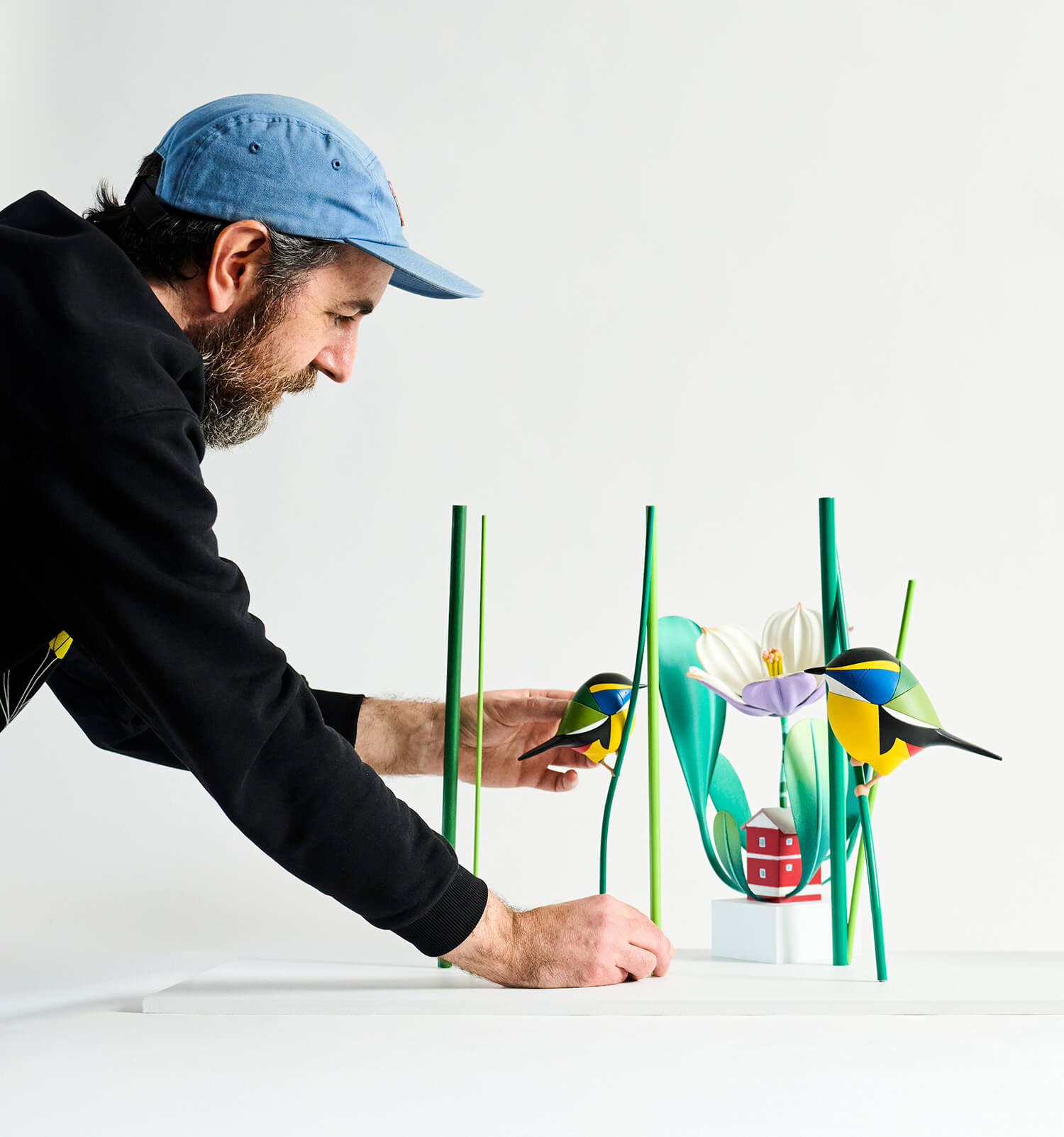
In this exhibition, Eggpicnic and Anis 88 merged their worlds, blurring the lines between birds and humans, exploring how movement, migration and memory connect us all. It was presented at Craft+Design Canberra in September 2025 and supported by the Division of Cultures, Arts, Heritage and Public Diplomacy under the Ministry of Foreign Affairs of Chile (DIRAC) and the Embassy of Chile in Australia.
Anis 88
The heart of my work lies in the connection between hope, nature, and the human spirit. My art is a journey of searching — both across new landscapes and within myself — expressed through the symbolism of flight and movement.
Creating for me is guided by an invisible force: the need to transform ideas into matter. Migration has shaped this path; leaving Chile was like shedding an old skin, dismantling a nest, and learning to build again in another land.
My works weave elements of my origins — the native flowers and plants of Chile — with the skies and natural colors of Australia, my present home. Wetlands, birds, and fragile ecosystems appear often, because they are vital to life yet increasingly endangered. I honour these landscapes by working with recycled wood, giving it new value and meaning.
Community is essential to my practice. My works are only complete when they are observed and felt by others. I hope people see themselves in nature, empathise with it, and remember that we share the same planet. Through this, I also seek to inspire conscious consumption and spark creativity in others.
Eggpicnic
We create work that bridges art, ecology and memory, using storytelling as a way to connect communities across cultures. Tracing the Sky is a deeply personal exploration of migration, an experience that has shaped our lives and the lives of so many around us. Through this exhibition, we reflect on what it means to leave one landscape behind while learning to belong to another.
Our works weave together fragments of memory: the vast wetlands of Chile, the birds that once filled our childhood skies, and the Australian species that now inhabit our present. Wetlands hold particular significance for us. They are places of abundance, resilience and migration, sustaining countless lives across hemispheres. In our work, they become both a symbol of home and a reminder of the fragile ecologies that bind us to place.
This project was also an invitation. We wanted to open a space for others who have migrated to Australia to share their stories, creating a collective narrative that celebrates our journeys. By bringing these voices together, we hope to foster empathy and understanding, reminding us that migration is not only movement but a transformation of identity, landscape and belonging.
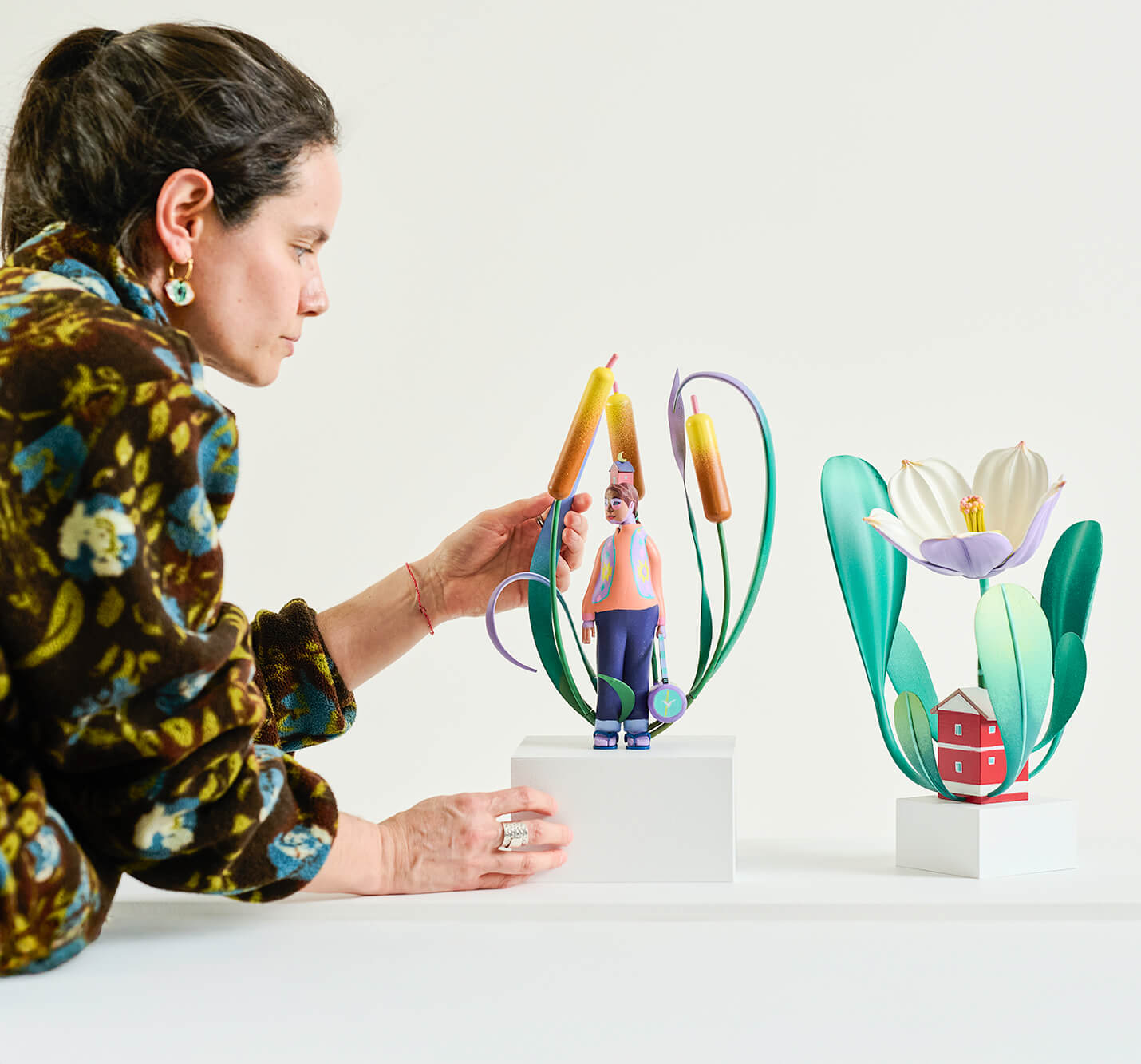
Tracing the Sky celebrates the migration of birds and people, and their deep connection with wetlands. Migratory birds cross oceans and continents in search of safe places to feed and nest. These long journeys are part of an ongoing movement across diverse bird species, forming a vital life cycle essential to their survival. Their ability to travel vast distances speaks to their resilience, and their capacity to cross countless borders reflects a powerful sense of freedom.
Like birds, people migrate too. Migrants seek a better life, one they may not have found in the places they left behind. And just like birds, with all their diversity of colour, form and flight paths, every migrant carries their own story. These unique experiences have brought them to Australia. Migration is difficult, and if there is one thing every migrant, human or bird, shares, it is uncertainty. Uncertainty is the inability to predict what lies ahead. It is a defining part of migration. It can be unsettling, often frightening, yet it propels the journey forward.
Wetlands are key to understanding bird migration and have long shaped human journeys and movement. They are vital ecosystems that filter water, store carbon, reduce flooding, and support an extraordinary range of plant and animal life. Wetlands are also essential for human survival, as they recharge groundwater, purify water, and are the planet’s largest natural water source. For migratory birds, wetlands offer both a place to rest and a destination, providing refuge to feed and nest.
Wetlands can also serve as a metaphor for building a home in a new country. They prompt deep and personal questions about the idea of home. What is home? Where is my home? If birds are always on the move, then where is theirs? Is it possible to have more than one home? Is Australia a home for me? Without a doubt, these questions, among many others, speak to the heart of the migrant experience.
Presented as part of the 80th anniversary of diplomatic relations between Chile and Australia, and coinciding with Chile’s national celebration on 18 September, Tracing the Sky draws a parallel between the ecological migration of birds and the human experience of migration. This interplay between the journeys of birds and people, and between wetlands as both ecosystems and symbols of home, invites reflection on the paths taken by birds and by those who have arrived in Australia. It affirms the right to migrate and to rewrite one’s life story. At the same time, it calls for the protection of wetlands, which support life in all its forms, and invites us to consider how we build our own homes.
The Dreamer
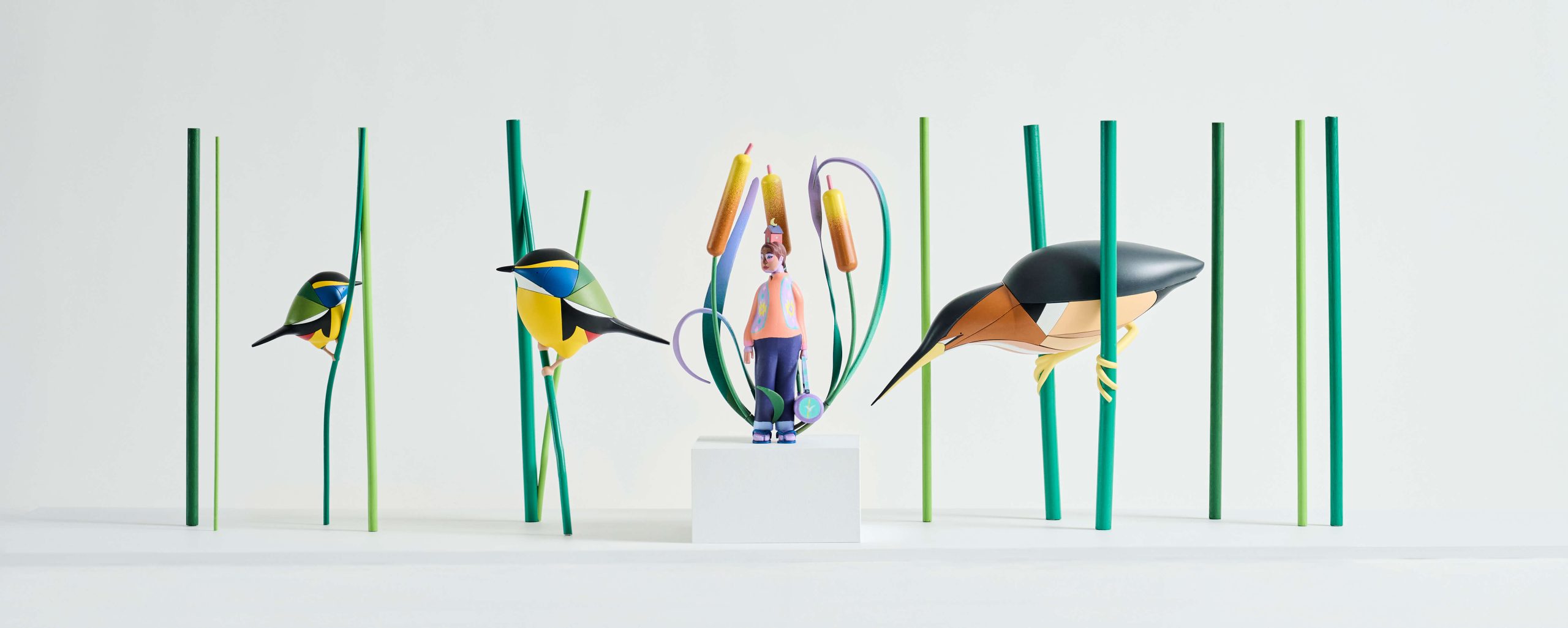
This work brings together wetland birds from Chile and Australia to explore shared ecologies that connect distant landscapes. Many migratory species depend on healthy wetlands around the world to rest, feed, and reproduce. Their survival relies on the protection of these habitats at every stage of their journey.
At the centre is The Dreamer: a human figure surrounded by estrellitas de las vegas, a native flower from southern Chile. Anis has chosen this flower because it represents resilience, beauty, and the delicate balance of ecosystems. With a house atop their head and a small bag in hand, this figure carries memories and hopes for a different future.
The Dreamer invites multiple interpretations, each shaped by the viewer’s own experience. Does the house on their head symbolise the search for a new home? Or perhaps it’s a remembrance of the home left behind? Maybe both? And what might be inside such a small, unassuming bag?
Together, these elements encourage us to reflect on the connections between humans and more-than-human life through migration and wetlands, and on the deep interdependence between species, place, movement and metaphor.
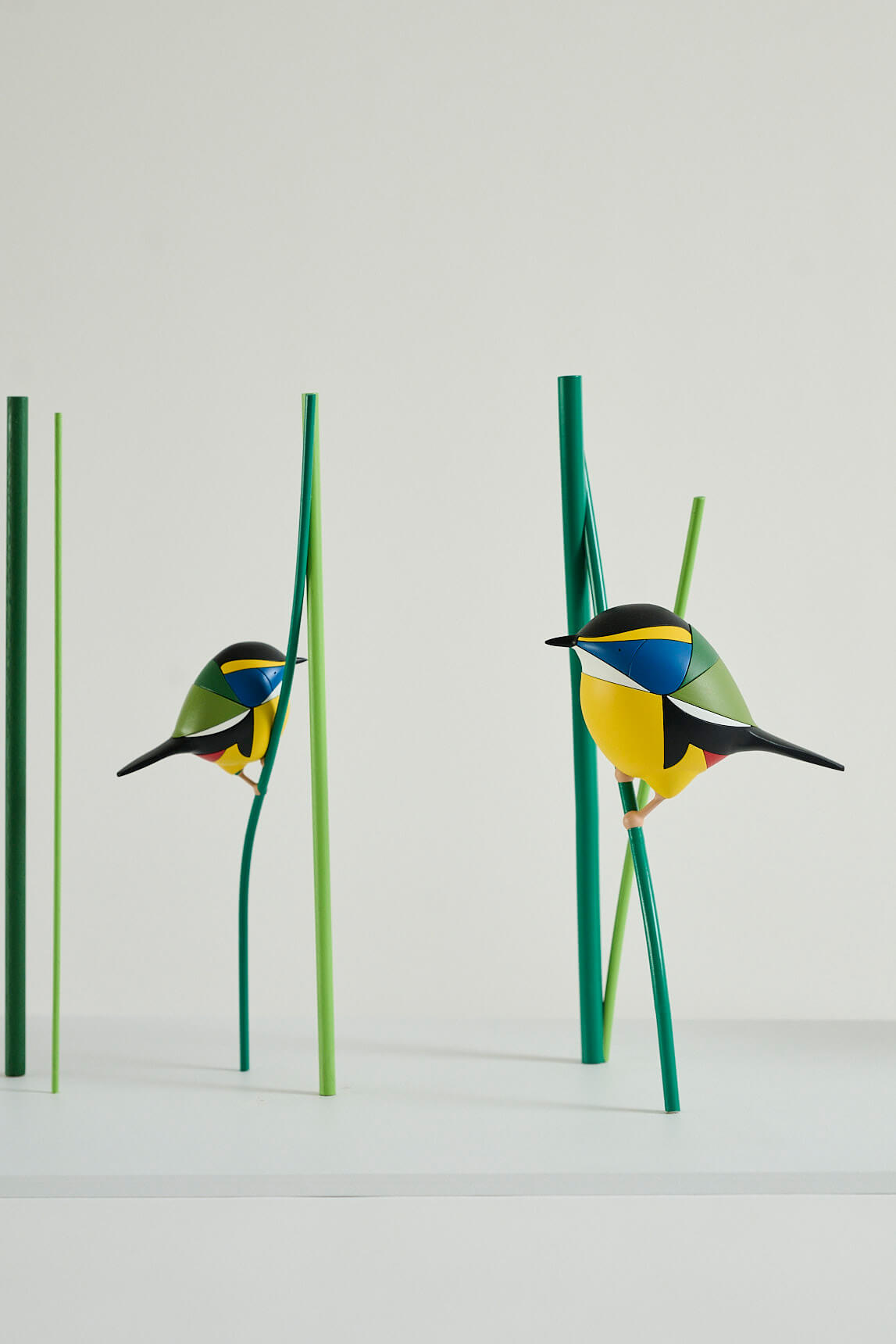
1. Siete Colores – Many-coloured Rush-Tyrant (Hand painted 3D print)
$3,500 pick-up Canberra only
In stock
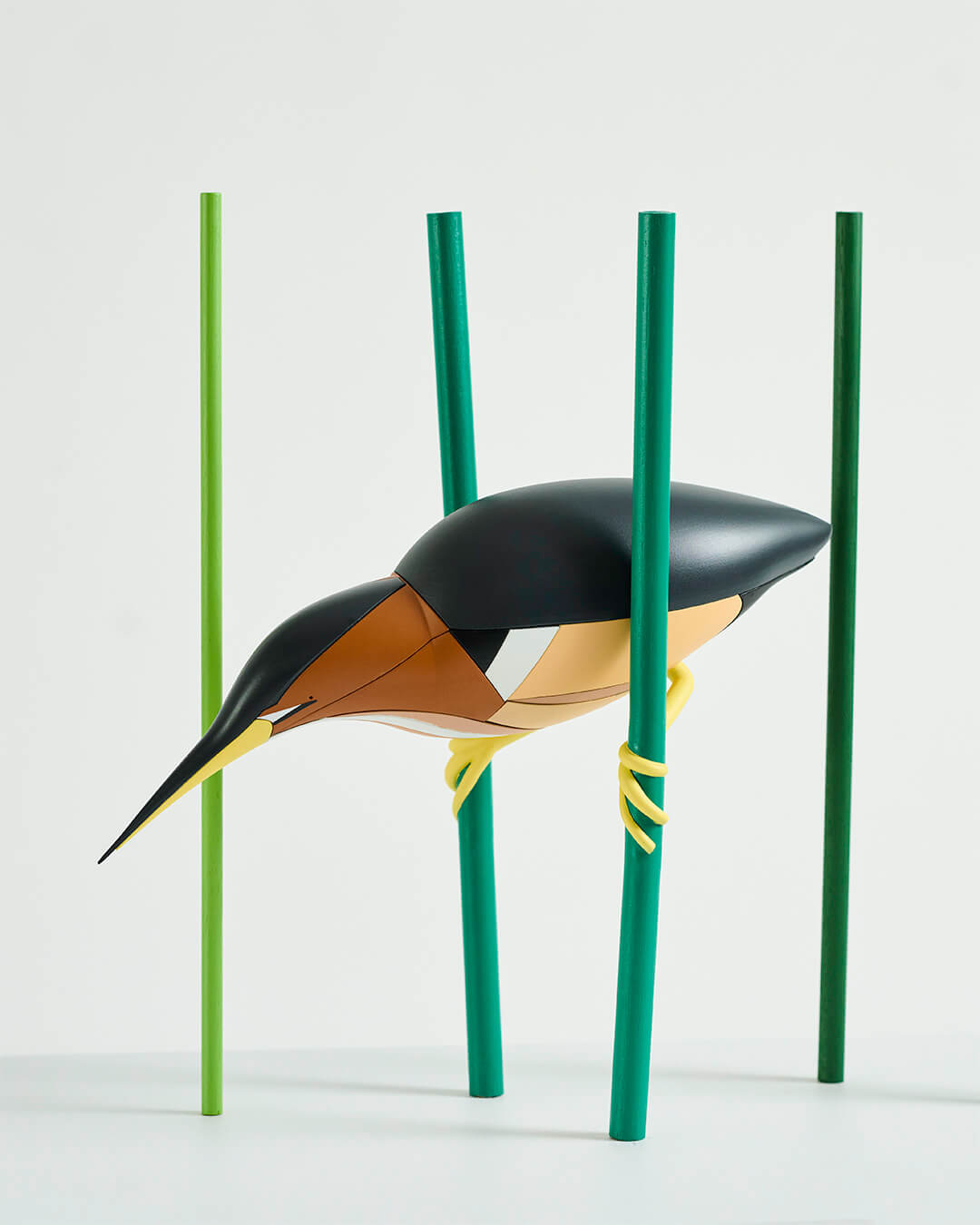
2. Australian Little Bittern (Hand painted 3D print)
$3,500 pick-up Canberra only
In stock
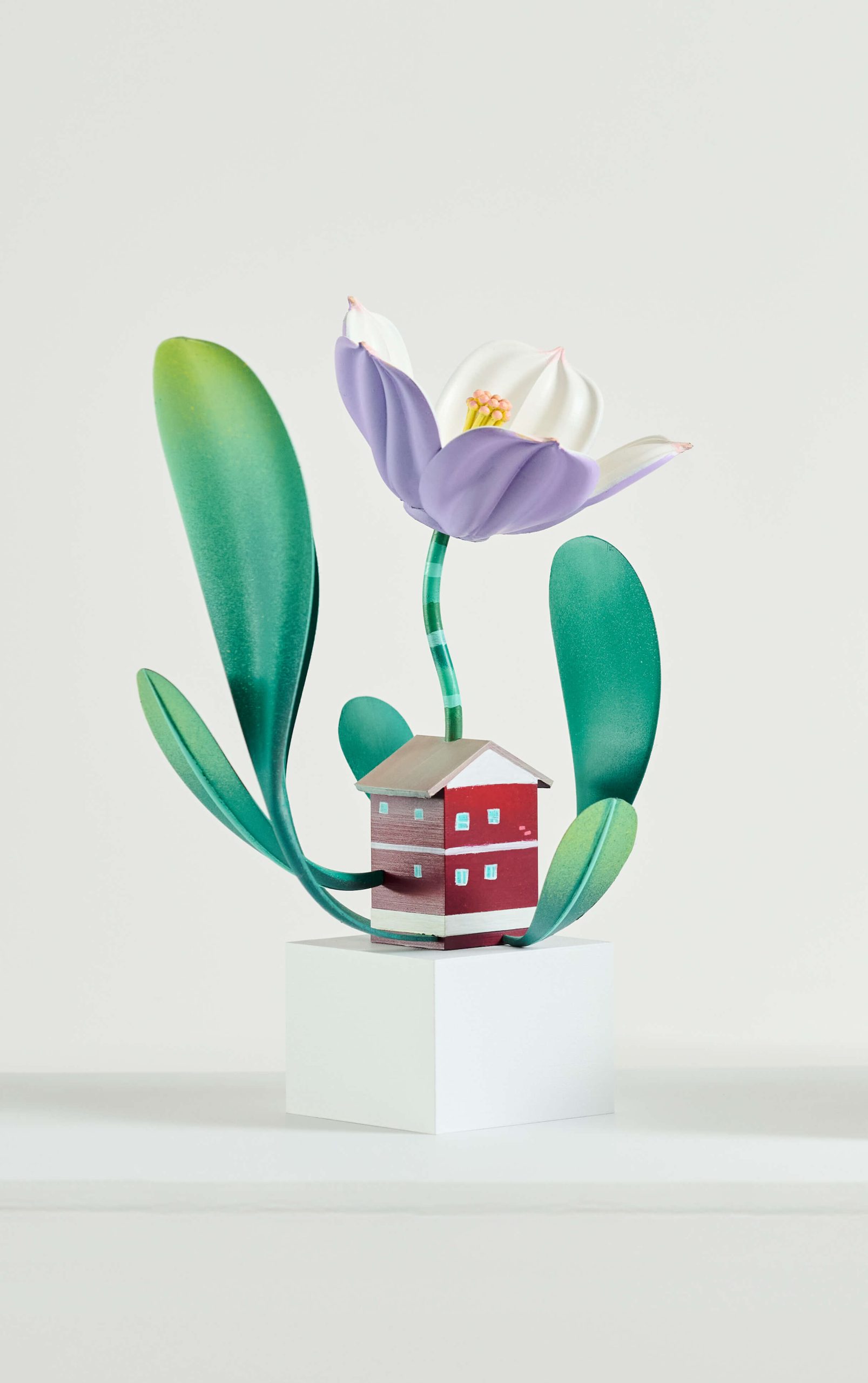
3. Estrellita de Las Vegas I (Hand painted 3D print)
$2,000 pick-up Canberra only
In stock
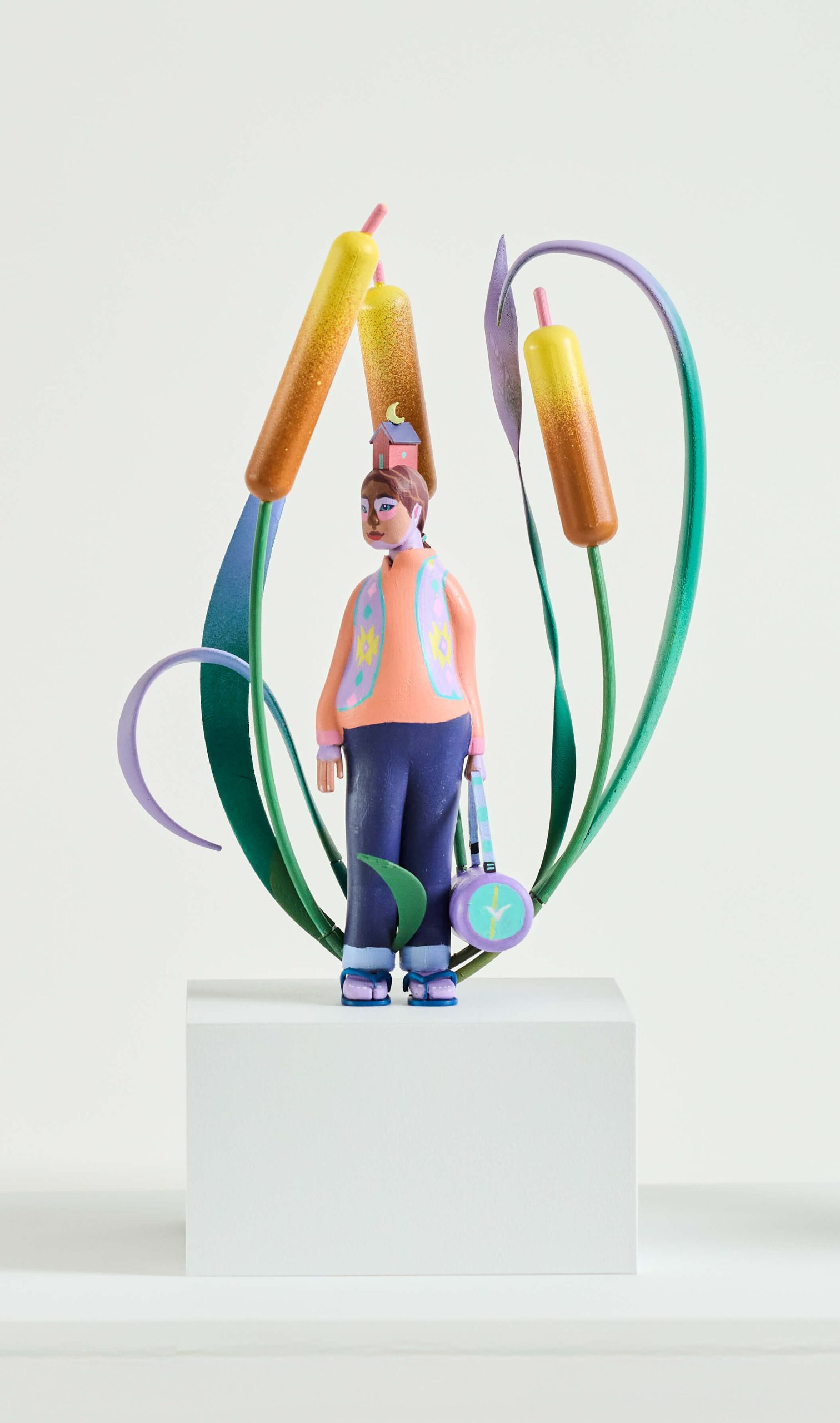
4. The Dreamer (Hand painted 3D print)
$3,500 pick-up Canberra only
In stock
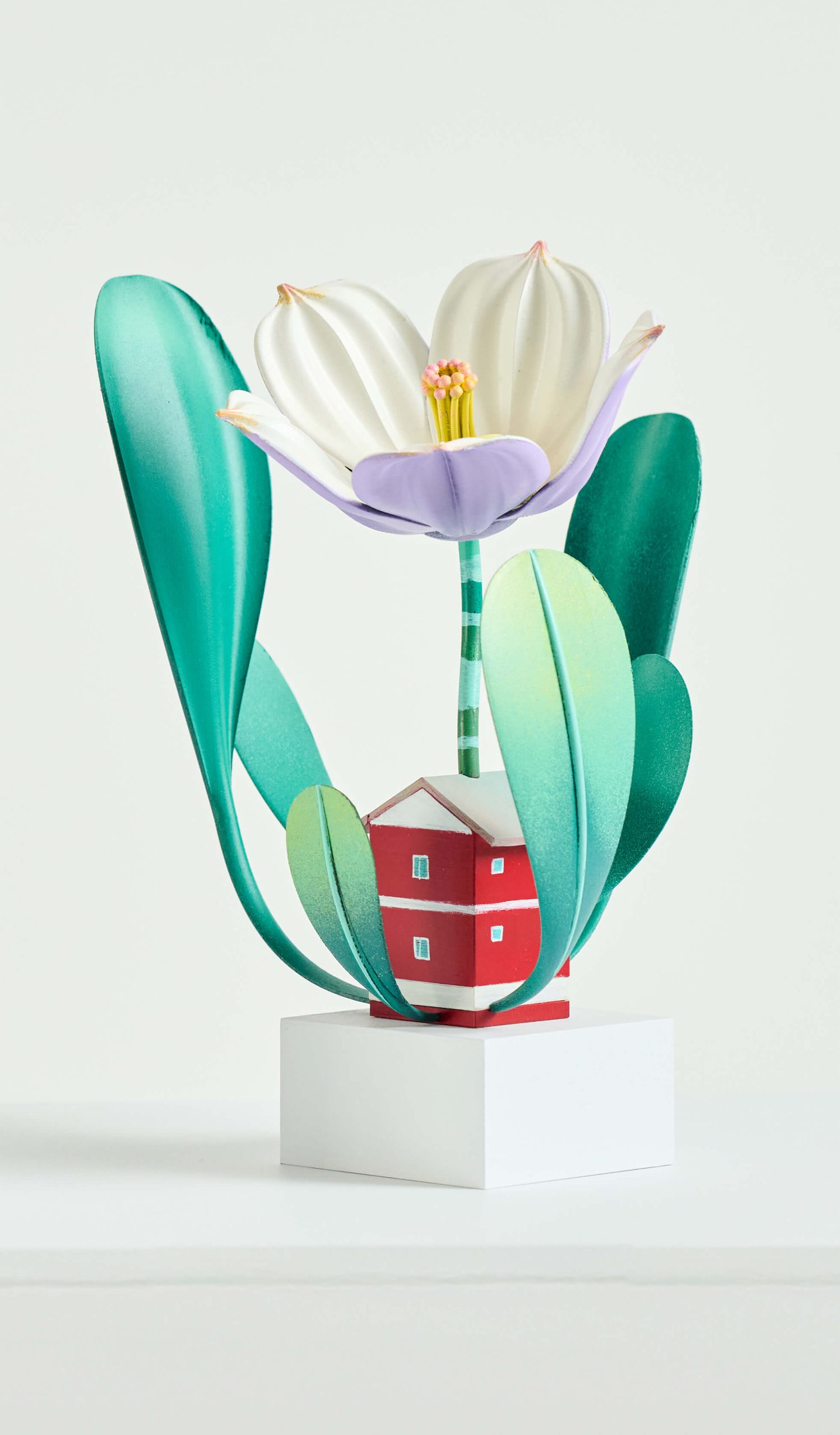
5. Estrellita de Las Vegas II (Hand painted 3D print)
$2,000 pick-up Canberra only
In stock
Reflections
The Wetland as a Temporary Home
Wetlands are ecosystems that hold water, nurture life and build memories. They greet the birds that return and farewell those that take flight. Wetlands are temporary homes that watch us grow. They are places where we have woven our life stories, places that hold our memories and prepare us to leave. For this reason, wetlands are past, present and future. They are a home we know and a home yet to be discovered. Wetlands and the human experience are more closely intertwined than we might imagine.
To migrate is a powerful verb. What migrates with us when we migrate? How much of ourselves remains in the familiar wetland, and how much will flourish in our new wetland? The passage from one place to another transforms our identity, our sense of belonging and the way we build our stories. Migration is a very powerful act. It is difficult, uncertainty can stretch on, but behind it is a valid decision and a right that supports human mobility.
This space gathers personal testimonies from Chileans, along with migrants from other parts of the world, who have chosen to migrate with courage, longing and resilience. These stories, and the strength each one requires, recall the extraordinary tale of a migratory bird that, over its lifetime, flew a distance equal to the space between the Earth and the moon.
Wetlands also resemble home in that they are fragile spaces that require care. In Chile, threatened wetland birds such as the Magellanic Plover and the South American Painted Snipe depend on these ecosystems to survive. In Australia, Latham’s Snipe also relies on healthy wetlands that support life across continents.
Australia and Chile both stand behind the Ramsar Convention, which recognises wetlands of international importance and promotes their wise use and conservation. In addition, Australia participates in four principal multilateral treaties that bolster wetland protection and migratory bird conservation: the Convention on Biological Diversity, the Convention on the Conservation of Migratory Species of Wild Animals, the Convention on International Trade in Endangered Species of Wild Fauna and Flora, and the East Asian–Australasian Flyway Agreements—including JAMBA, CAMBA and ROKAMBA. These agreements reflect shared responsibility across nations to safeguard biodiversity, support ecological networks and uphold the fragile connections that span species, ecosystems and continents.
While these international agreements are an important step, they are only as effective as the actions taken on the ground. As nations, Chile and Australia have the opportunity and responsibility to go beyond commitments on paper and strengthen the protection of wetlands through local, national and regional efforts. This includes recognising Indigenous knowledge, supporting community-led conservation, and addressing the broader environmental threats that put wetlands and migratory species at risk. Protecting wetlands is not just about preserving nature. It is about safeguarding the shared futures of people, animals and ecosystems that depend on these living landscapes.
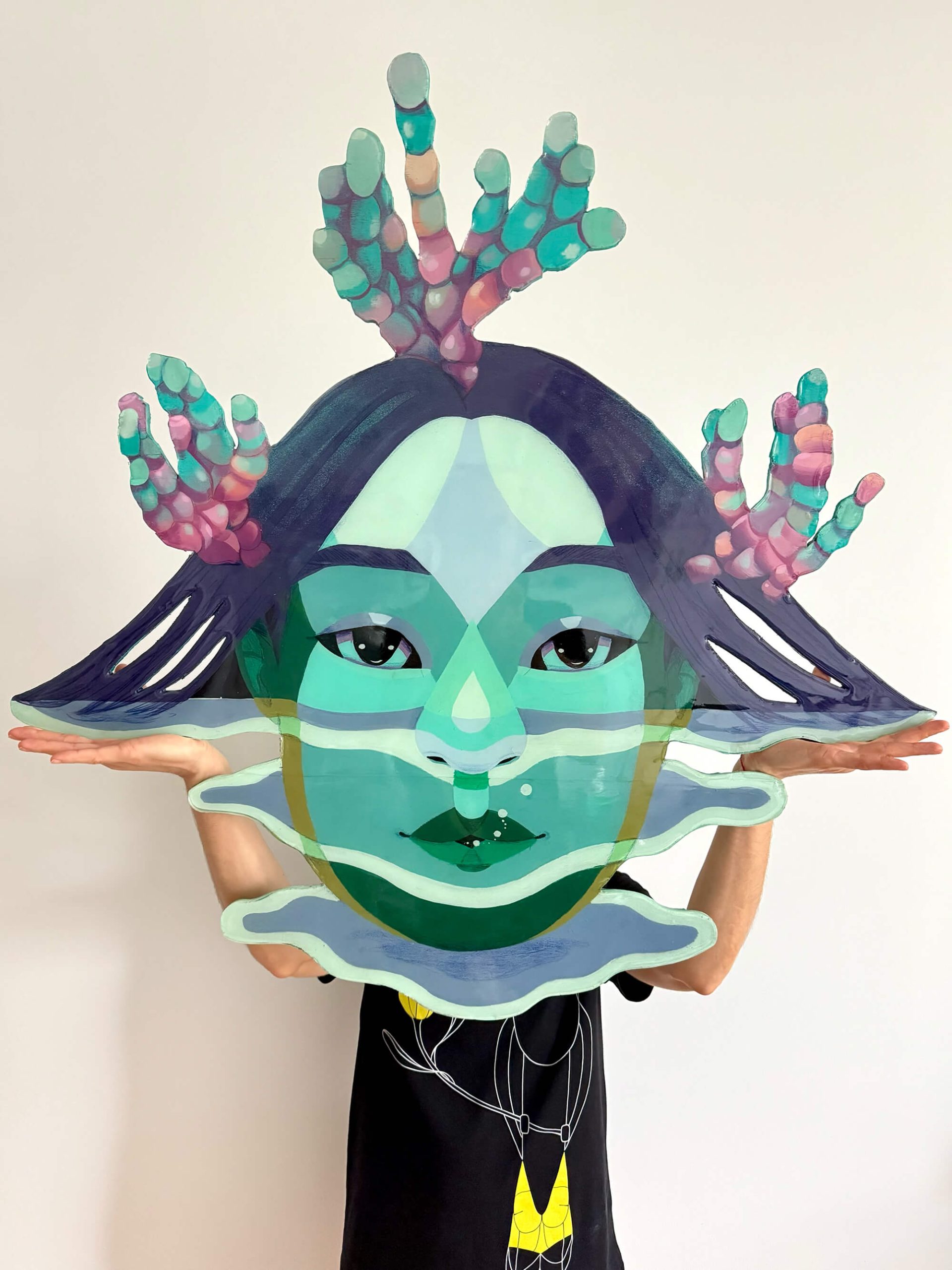
1. Agua Sarcocornia Neei (Acrylic paint and resin on repurposed MDF)
$2,500 pick-up Canberra
In stock
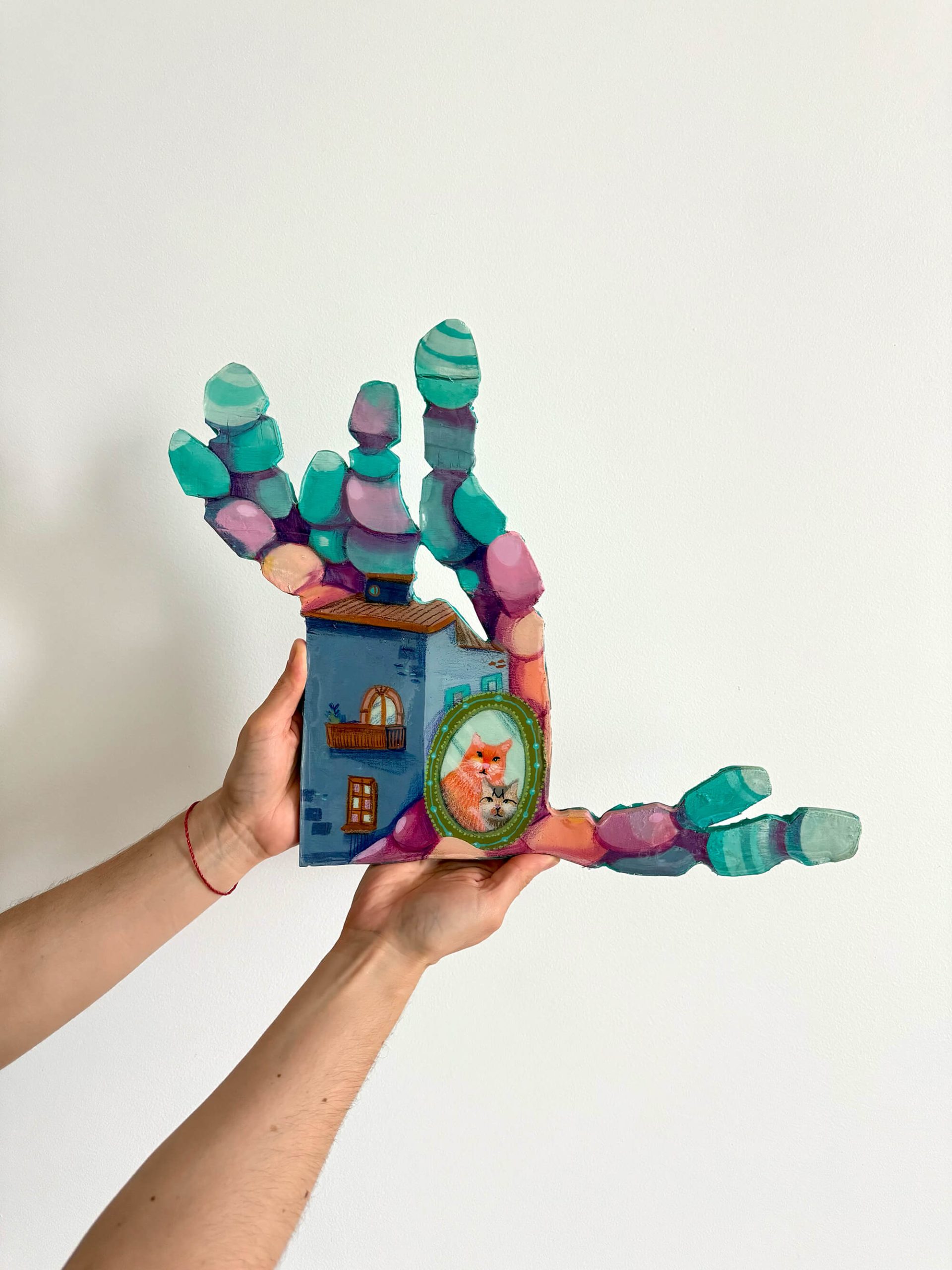
2. Sarcocornia Neei I (Acrylic paint and resin on repurposed MDF)
$600
In stock
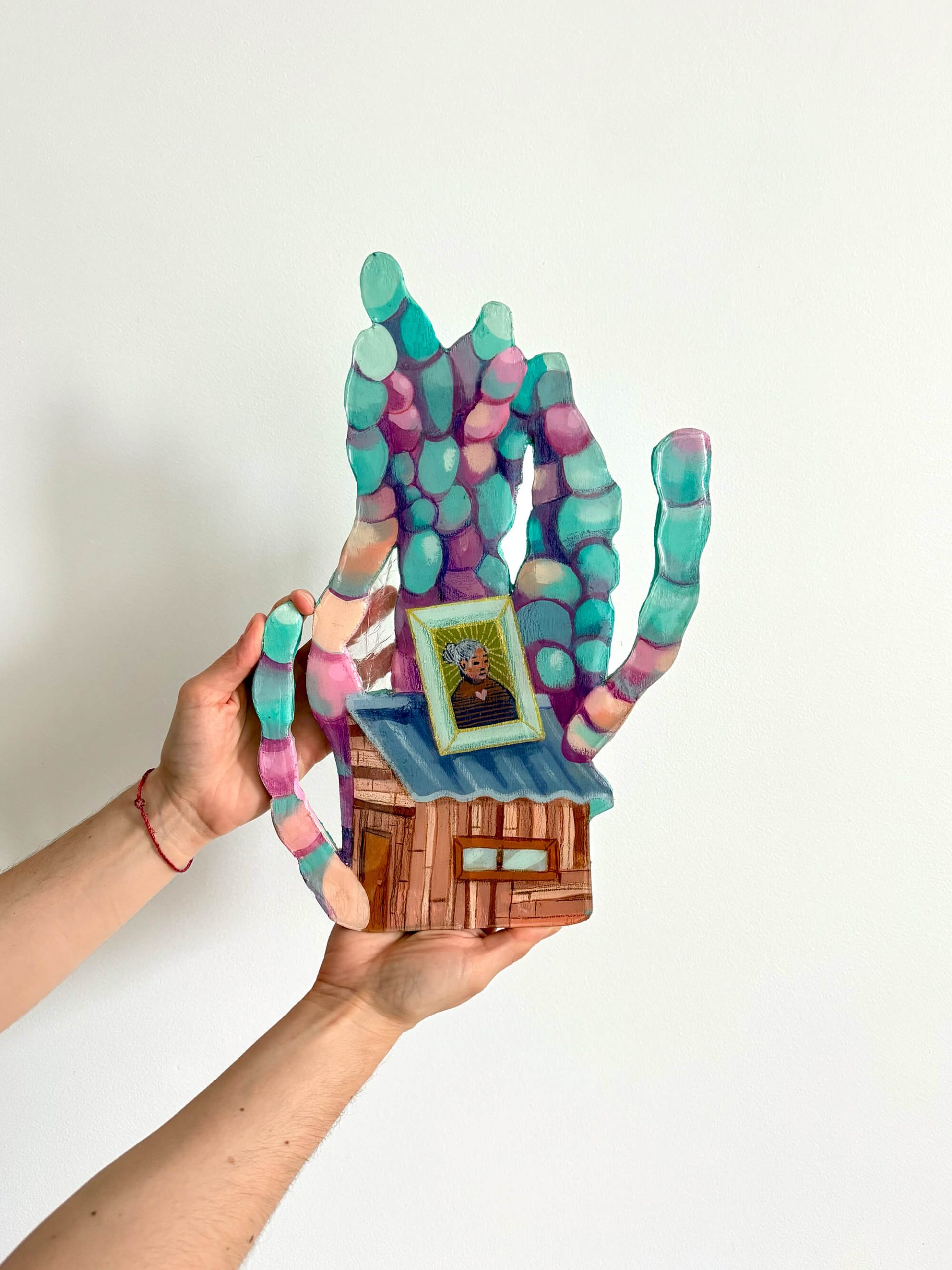
3. Sarcocornia Neei II (Acrylic paint and resin on repurposed MDF)
$600
In stock
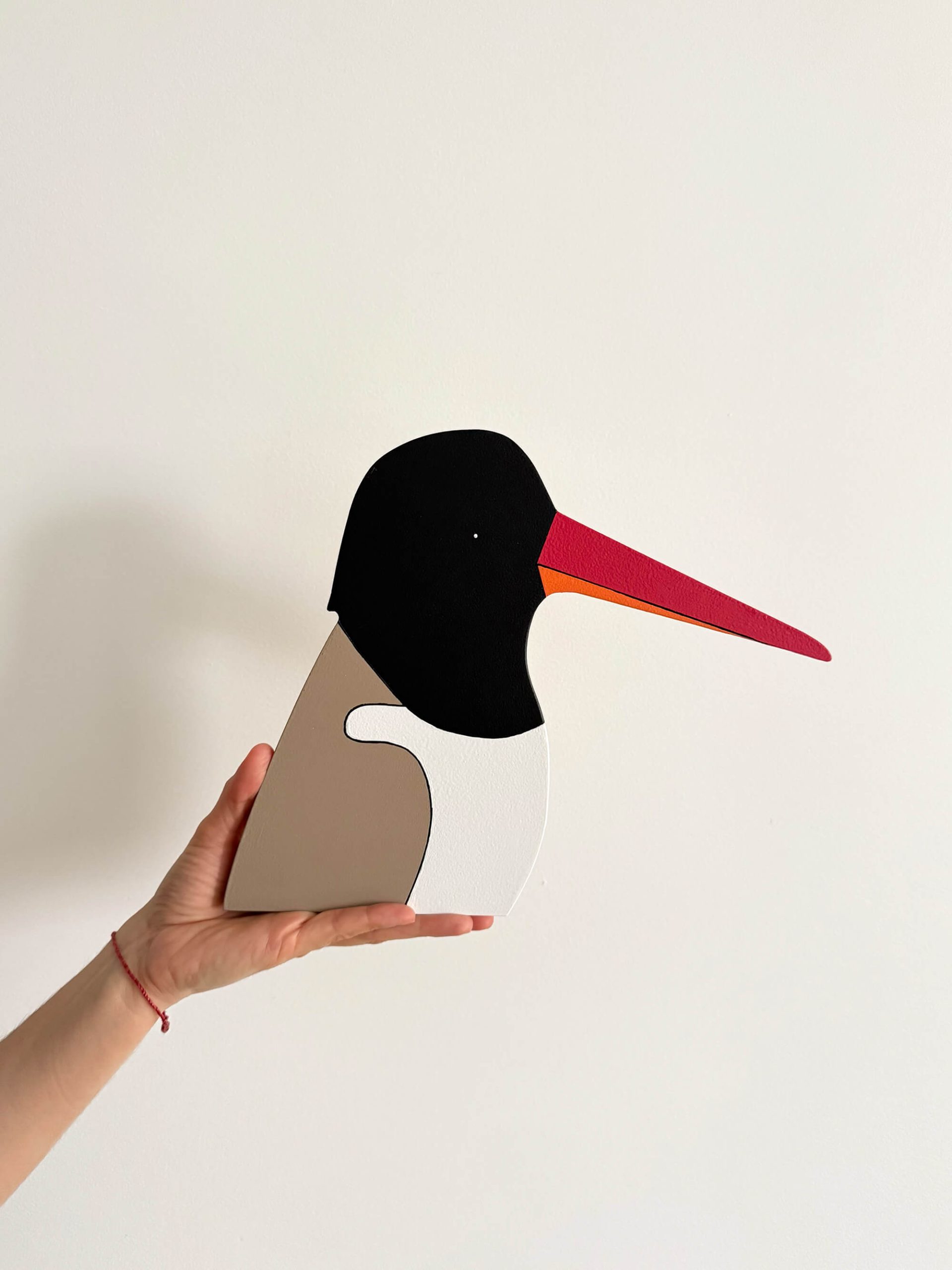
4. American Oystercatcher (Acrylic paint on plywood)
$500
In stock
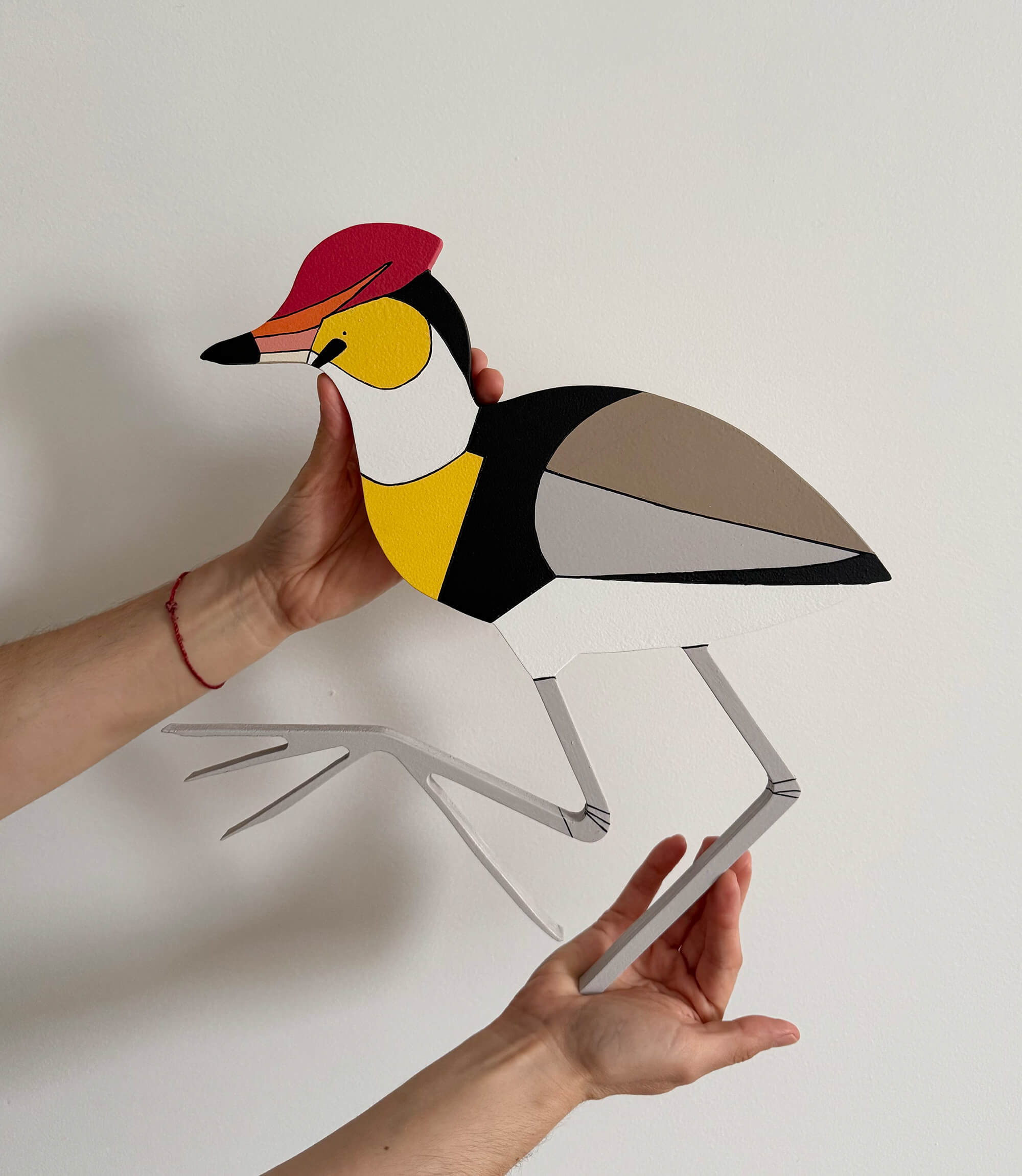
5. Comb-crested Jacana (Acrylic paint on plywood)
$600
In stock
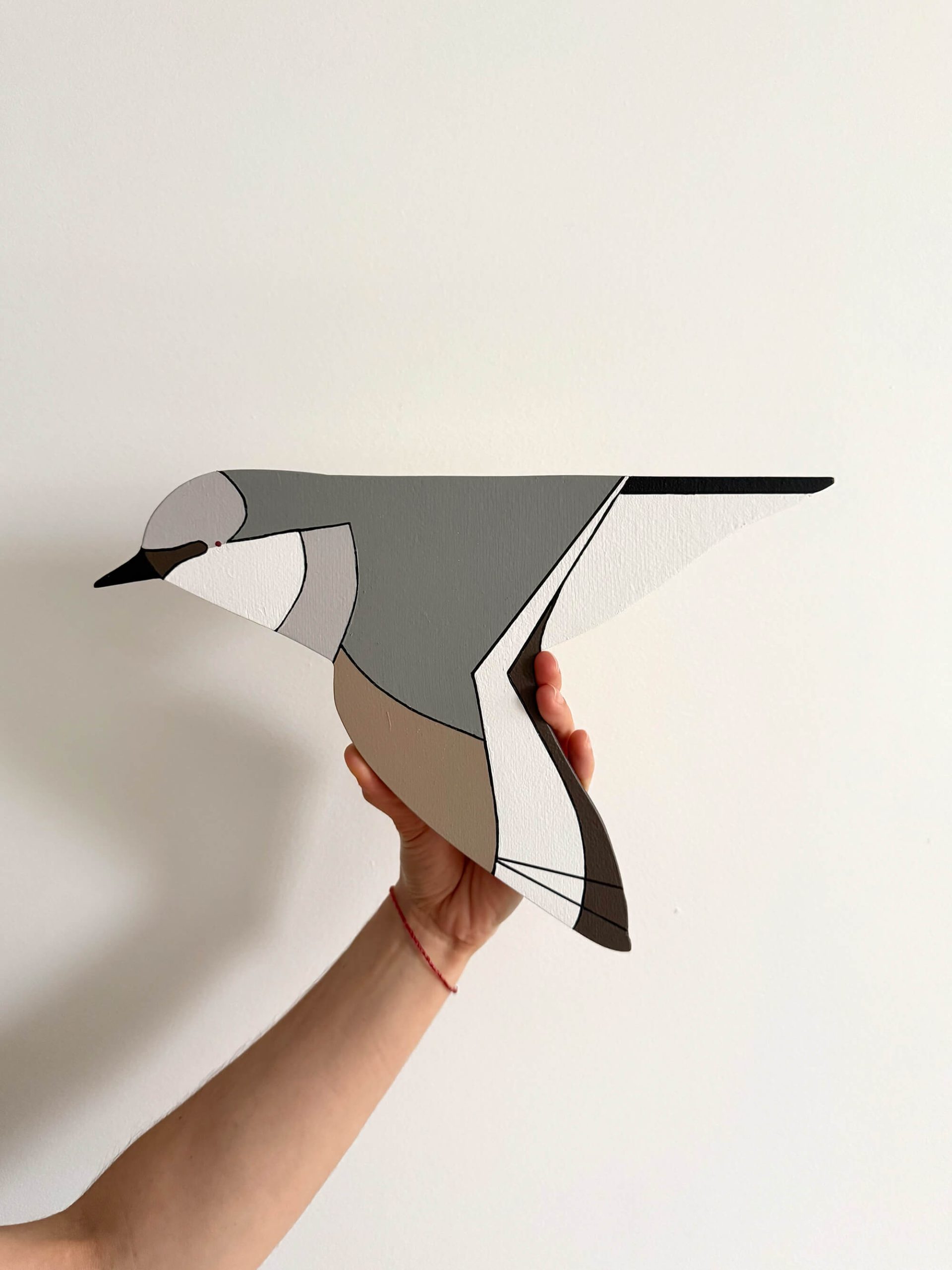
6. Magellanic Plover (Acrylic paint on plywood)
$500
In stock
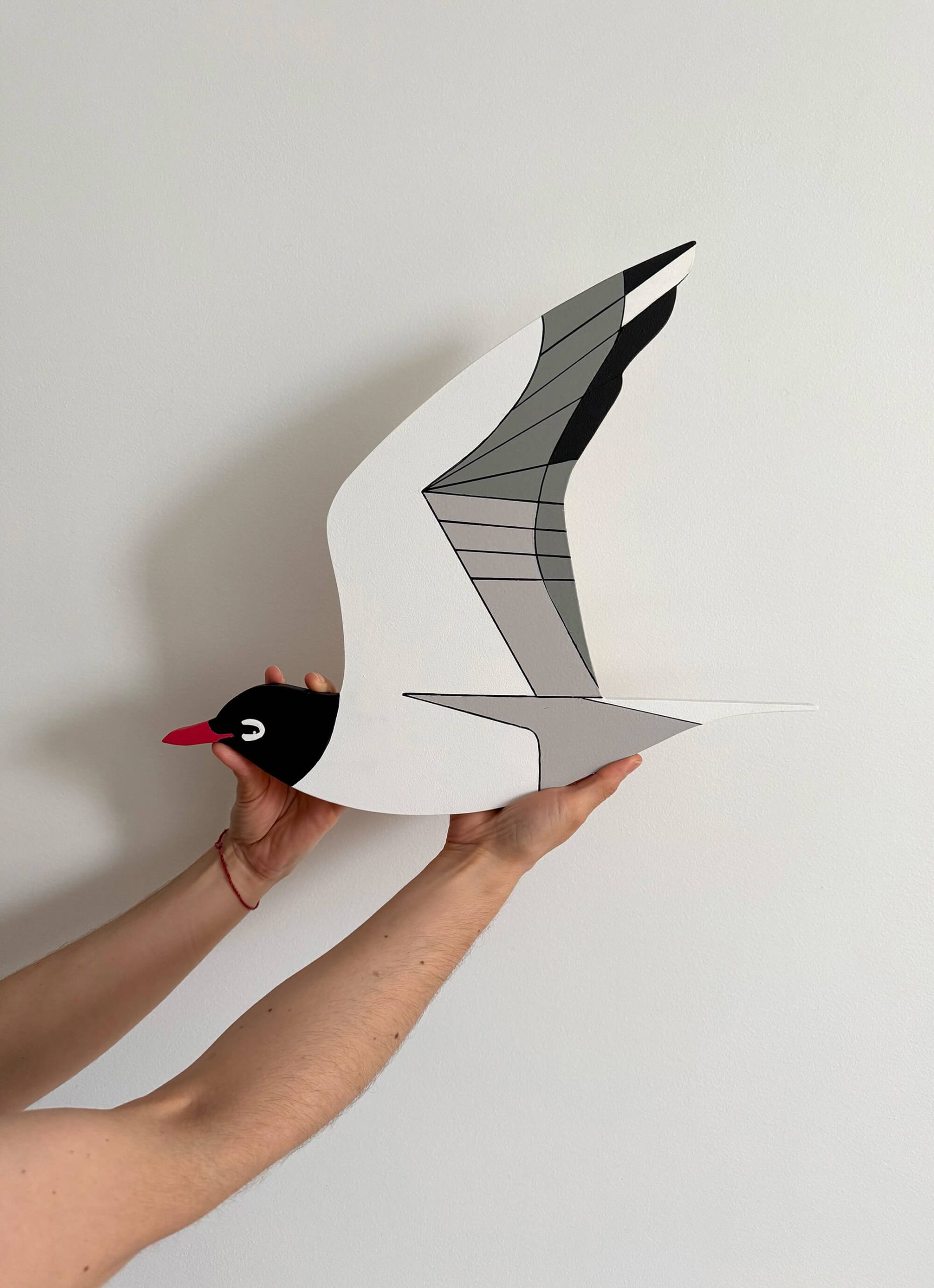
7. Franklin’s Gull (Acrylic paint on plywood)
$800
In stock
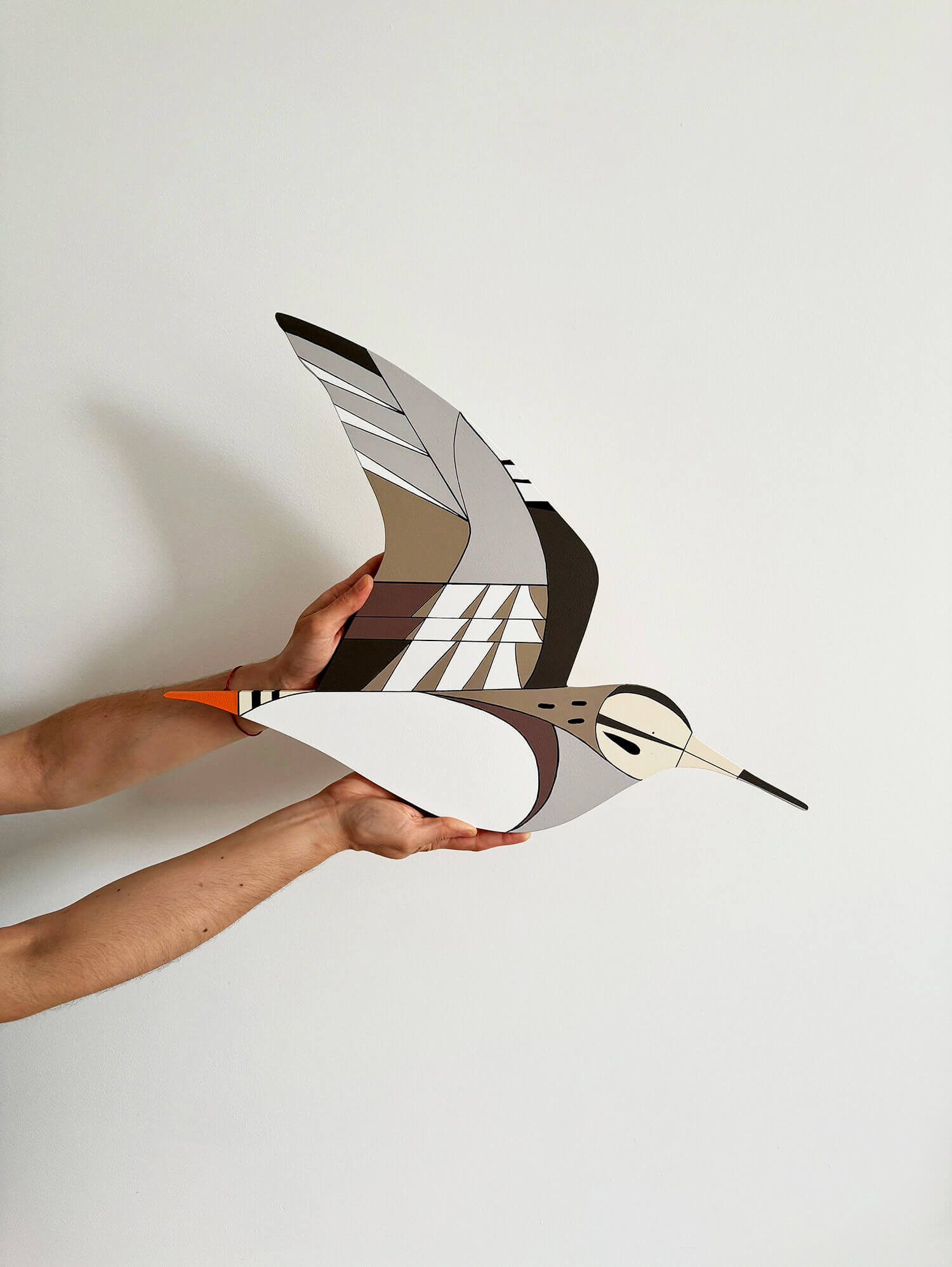
8. Latham’s Snipe (Acrylic paint on plywood)
$800
In stock
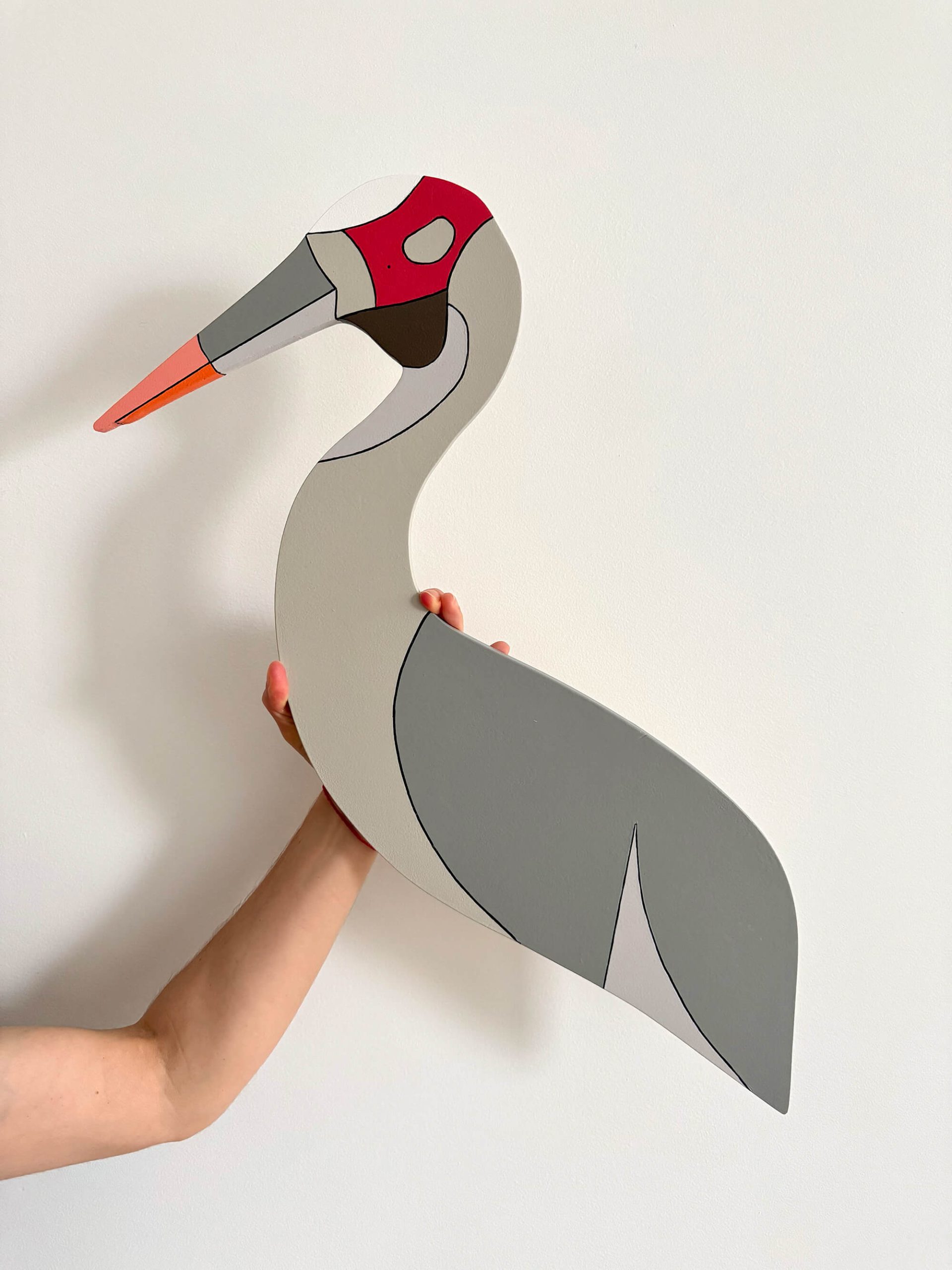
10. Brolga (Acrylic paint on plywood)
$900
In stock
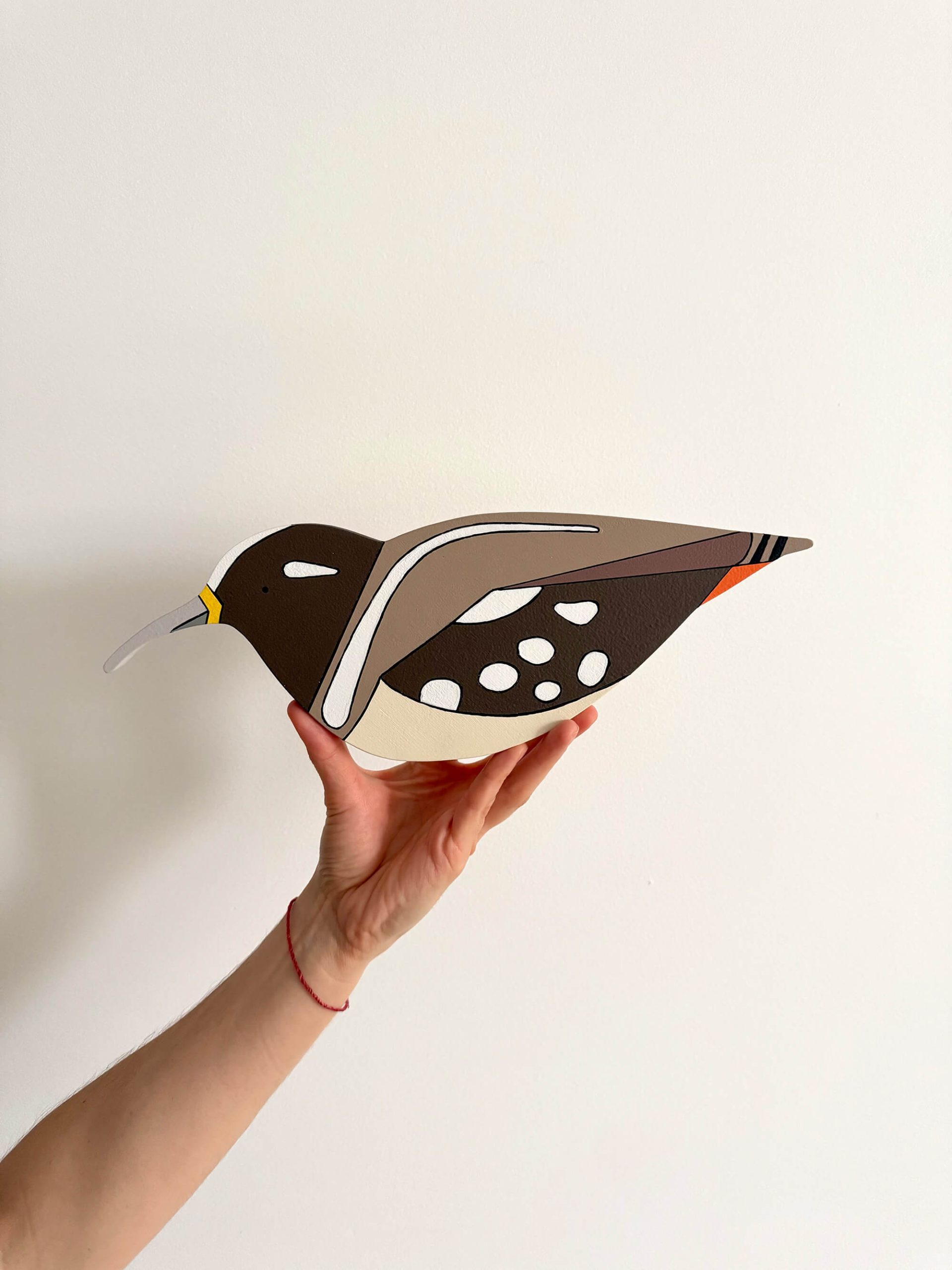
11. South American Painted-snipe (Acrylic paint on plywood)
$600
In stock
Migration
Stories of Flight: Human and Avian
Migration blurs the boundaries between birds and humans. People dress in feathers, wear bird masks, or stretch their arms wide, transforming them into wings. Human silhouettes cast birdlike shadows. These visual transformations reflect the journeys of migratory birds and the experiences of the Chilean community in Australia.
For centuries, people believed that birds disappeared into the sky or flew to the moon each winter. The discovery of an arrow lodged in the body of a bird returning to its starting point revealed something else. Migration often means see you later, though at times it may be a long and uncertain goodbye.
Like birds, human migration unfolds across vast distances and carries countless stories. It connects faraway places through the shared act of flight.
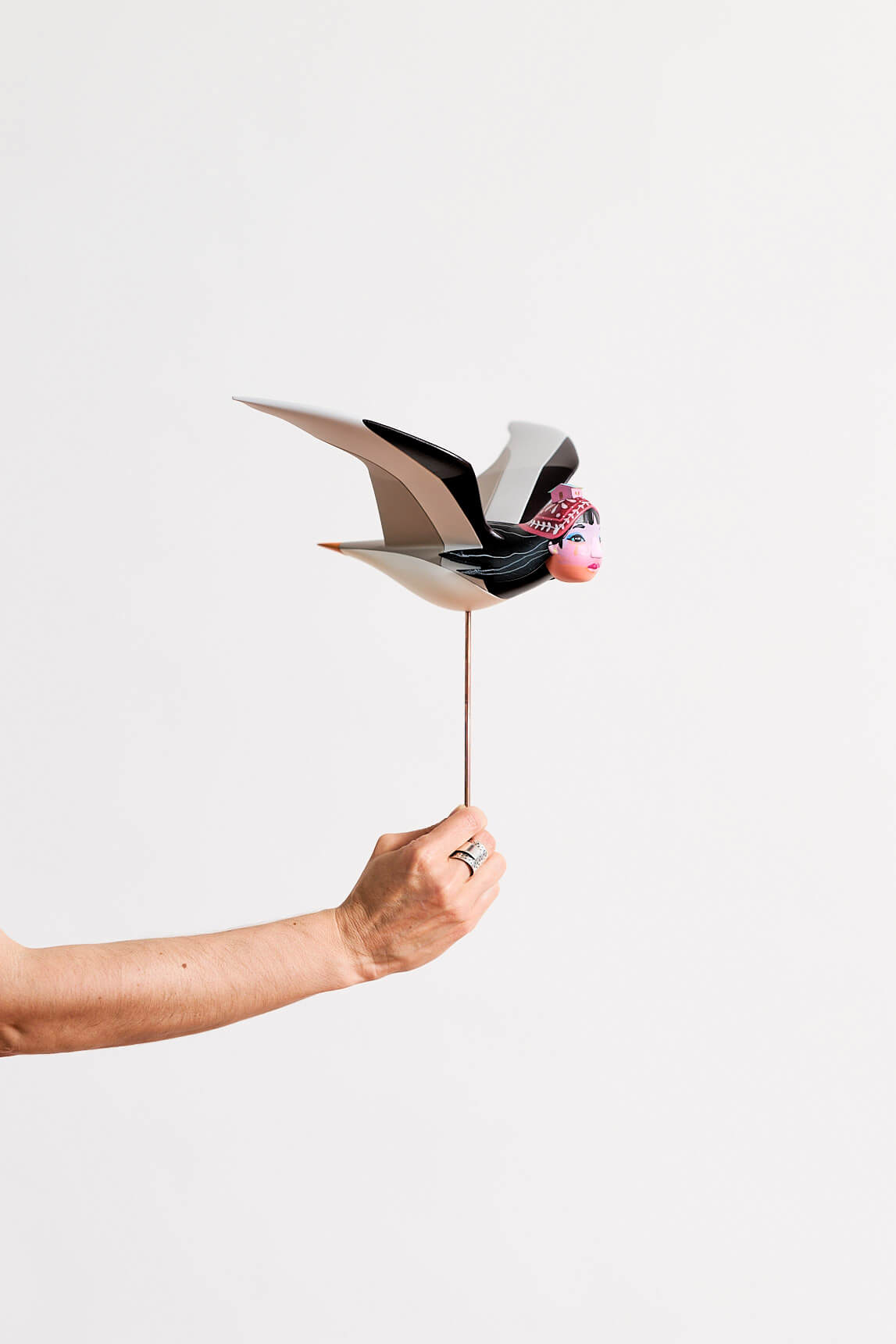
1. Nómade – Latham’s Snipe (Hand painted 3D print)
$3,000 pick-up Canberra only
In stock
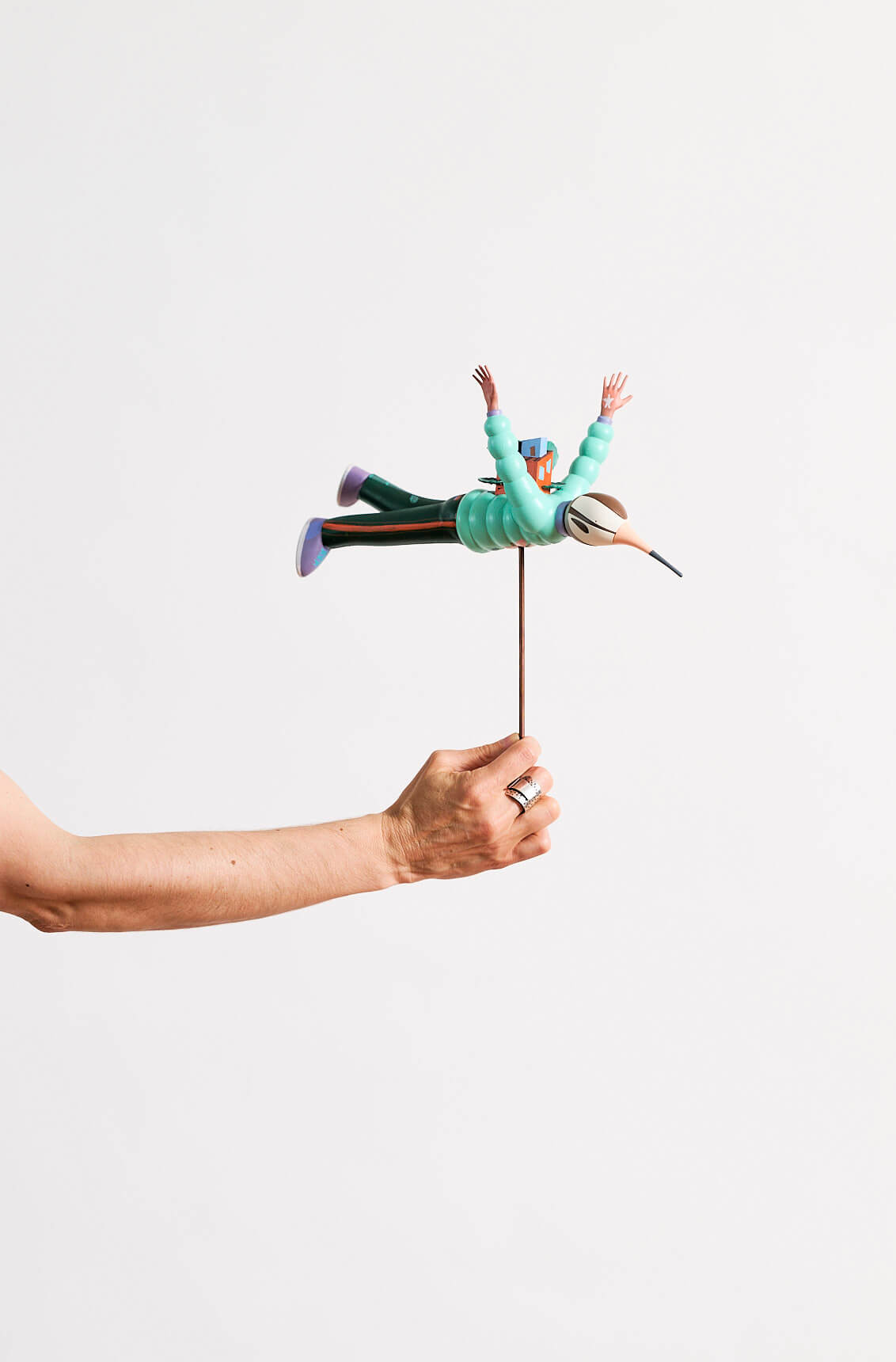
2. Tiqui Tiqui – Latham’s Snipe (Hand painted 3D print)
$3,000 pick-up Canberra only
In stock
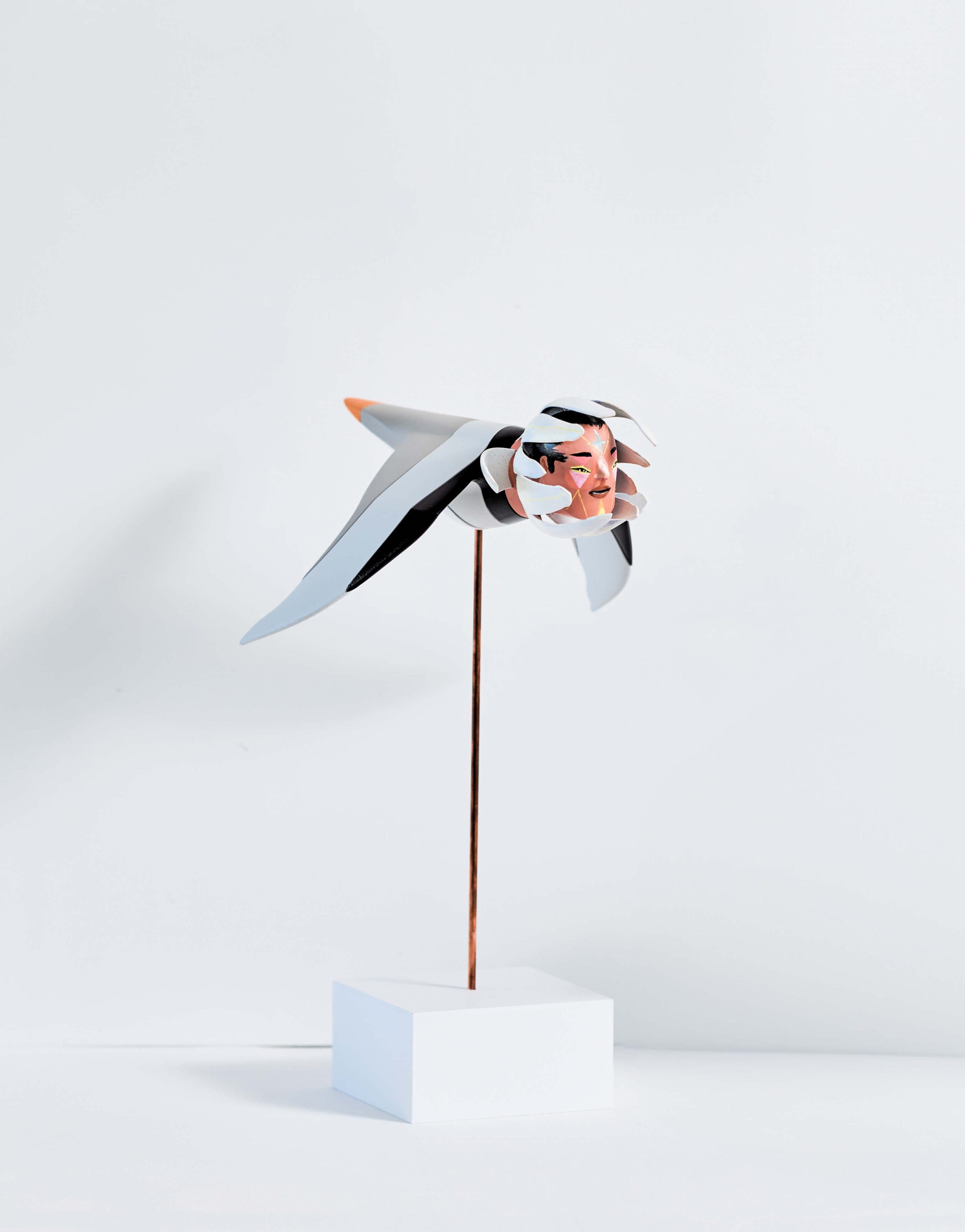
6. Perezia Magellanica – Latham’s Snipe (Hand painted 3D print)
$3,000 pick-up Canberra only
In stock
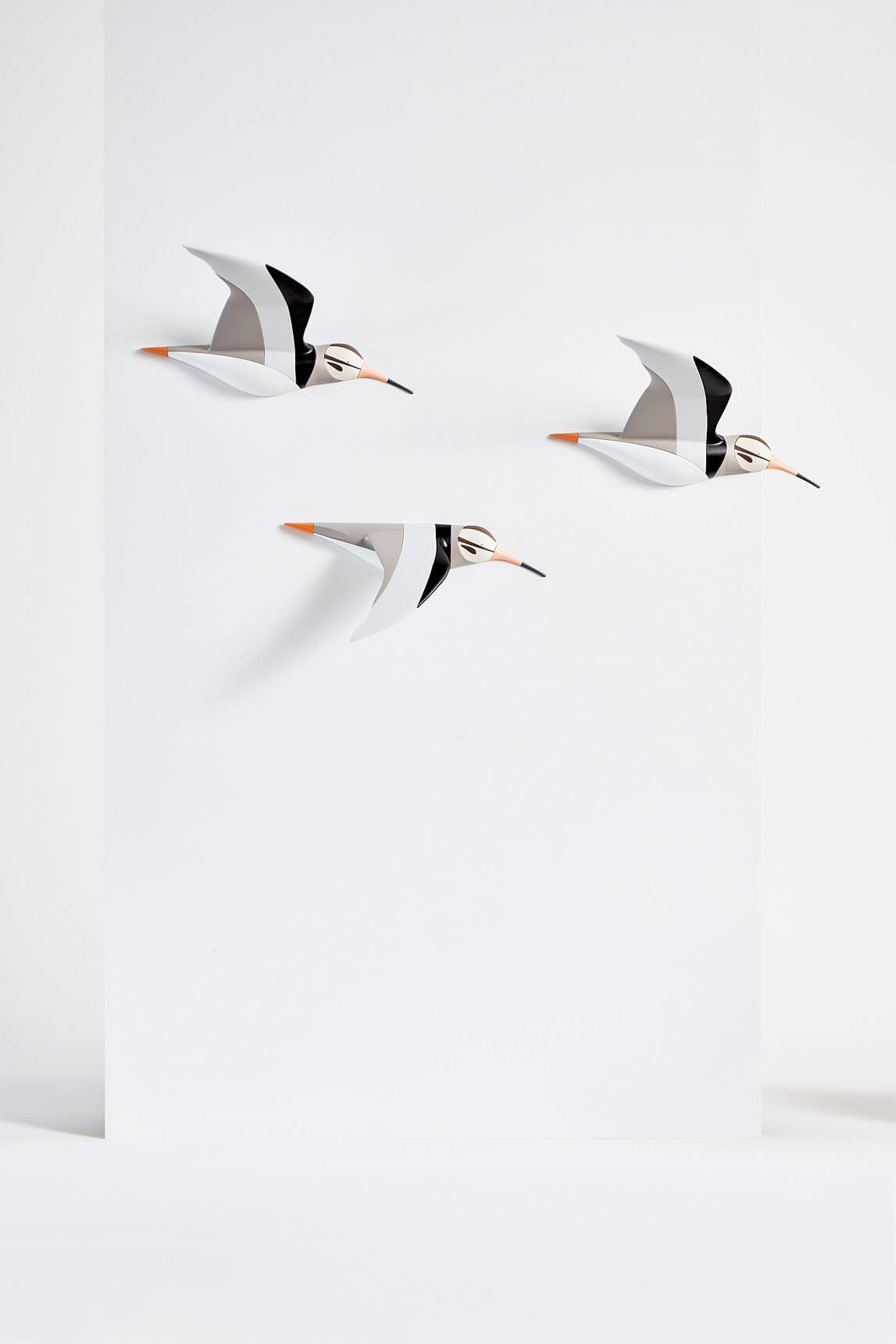
3. Latham’s Snipe in Flight I (Hand painted 3D print)
$1,000 pick-up Canberra only
4. Latham’s Snipe in Flight II (Hand painted 3D print)
$1,000 pick-up Canberra only
5. Latham’s Snipe in Flight III (Hand painted 3D print)
$1,000 pick-up Canberra only
In stock
What We Carry
The Inner Home: Humans and Birds
Painted works in repurposed wood, depicting human figures carrying birds within them and birds containing small human figures, invite reflection on what we carry when we leave a place and what we hold onto as we build a new life. These nested images explore the connection between our inner world and the journey of migration.
The home, the body and the bird each represent different forms of refuge, memory and movement. Whether crossing skies or flying over oceans, we always carry with us a language, identities and stories. Sometimes we search for refuge. Other times, we become it. These works honour the intimate experience of carrying home within ourselves, whether as a memory or as a future yet to be built.
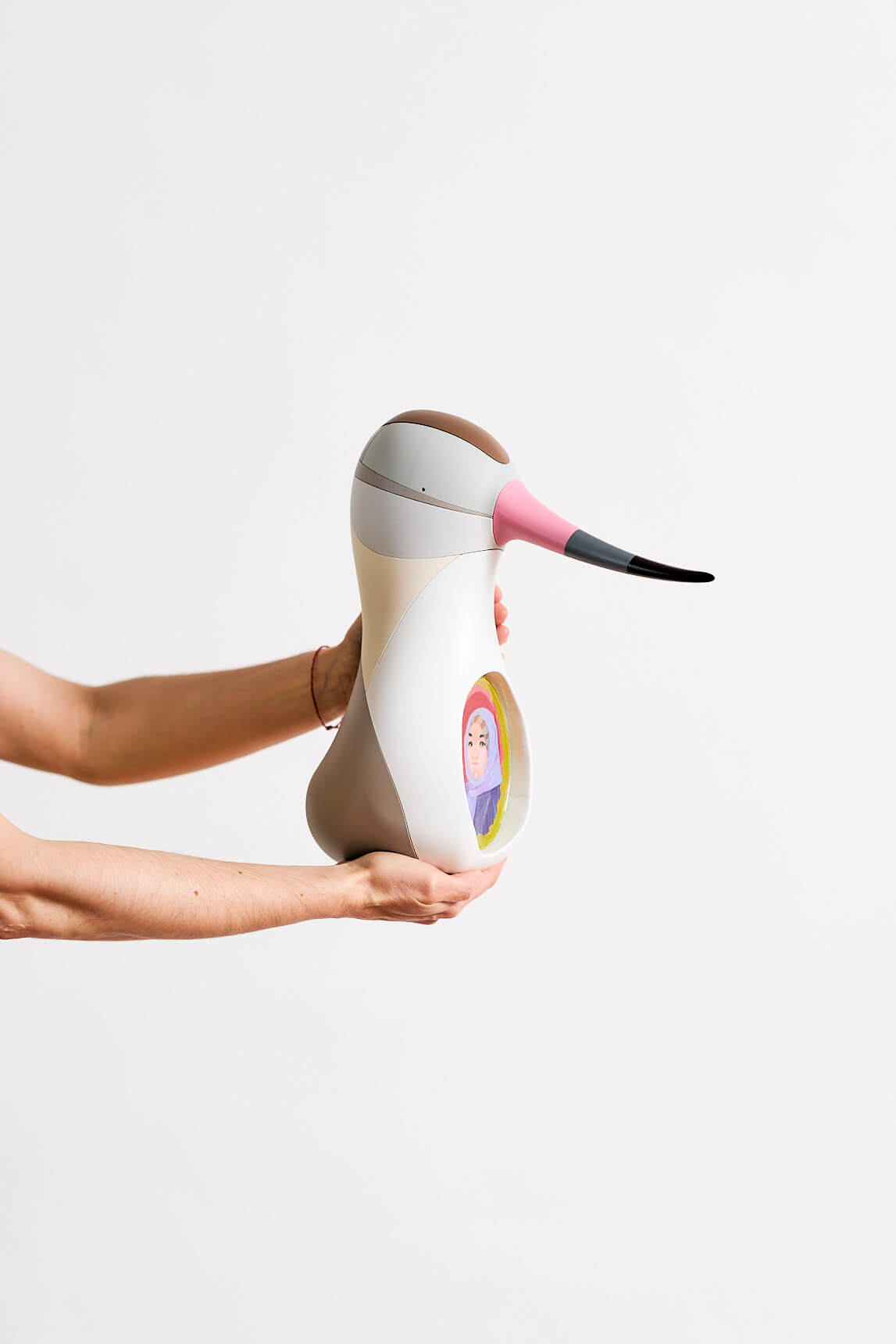
1. I think of you – Bar-tailed Godwit (Hand painted 3D print and Acrylic paint on repurposed MDF)
$3,300
In stock
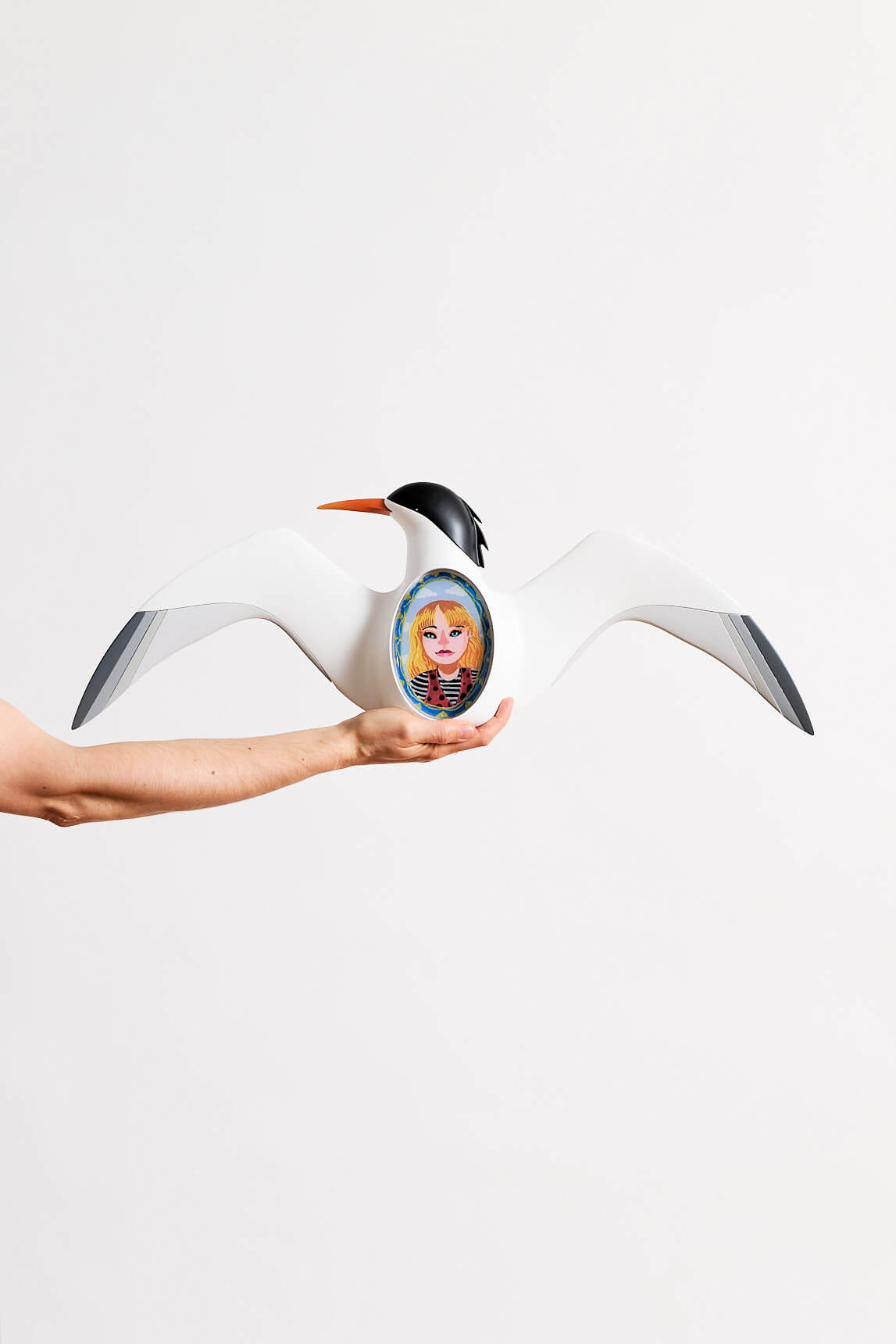
2. Roots and Wings – Elegant Tern (Hand painted 3D print and Acrylic paint on repurposed MDF)
$3,500 pick-up Canberra or Sydney
In stock
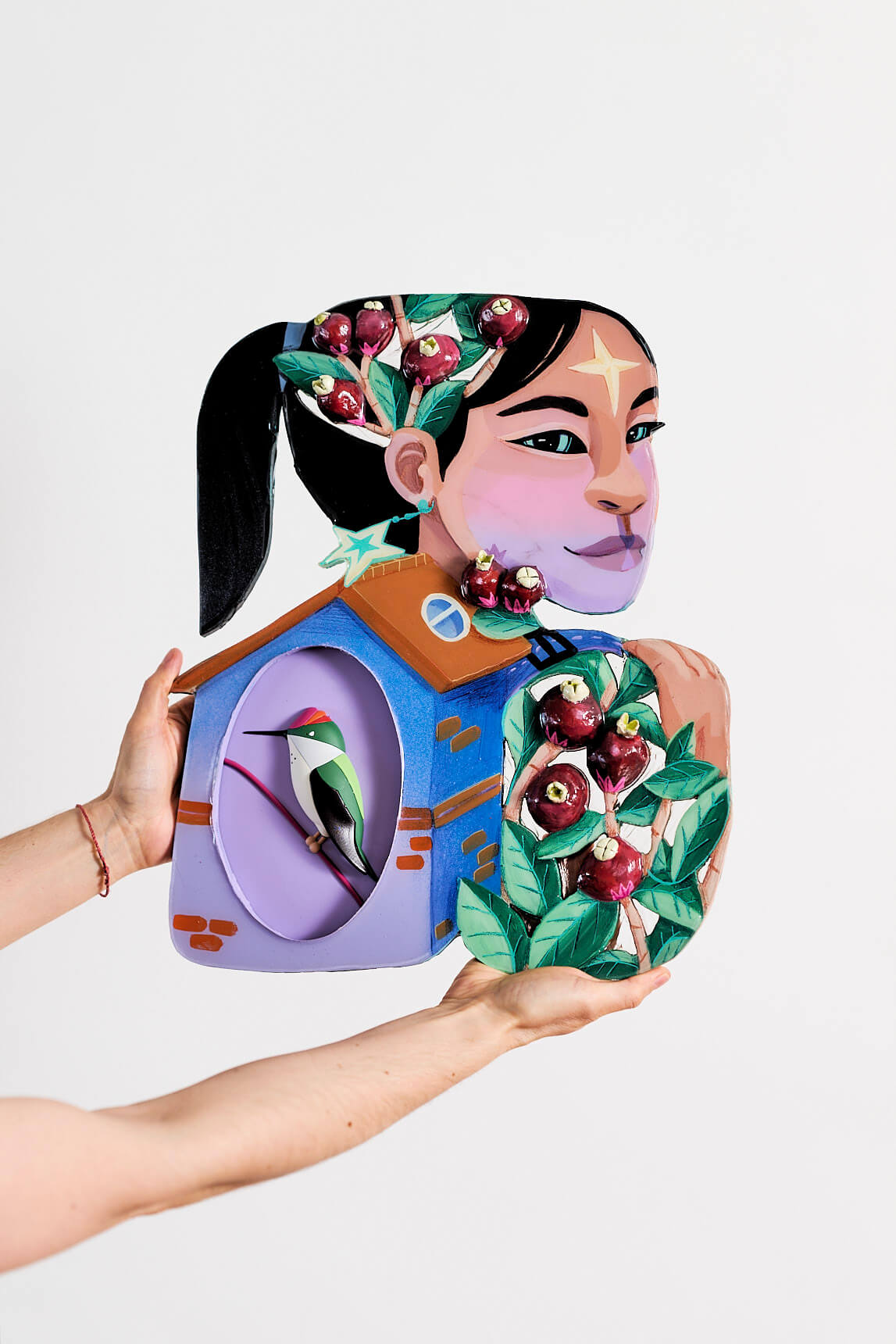
3. Luma Chequen – Green-backed Firecrown (Acrylic paint and resin on repurposed MDF and Hand painted 3D print)
$5,000
In stock
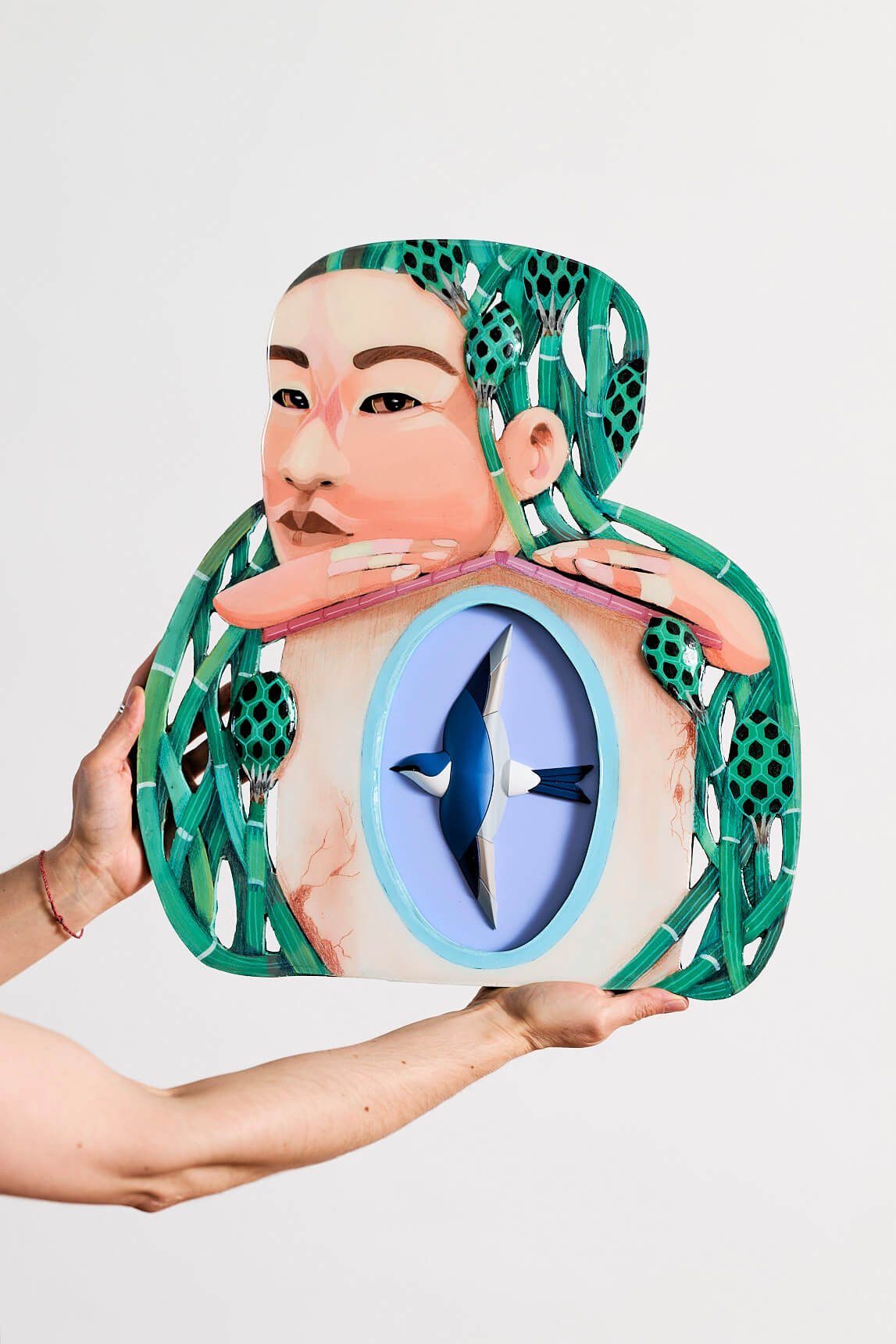
4. Cola de Caballo – Chilean Swallow (Acrylic paint and resin on repurposed MDF and Hand painted 3D print)
$5,000
In stock
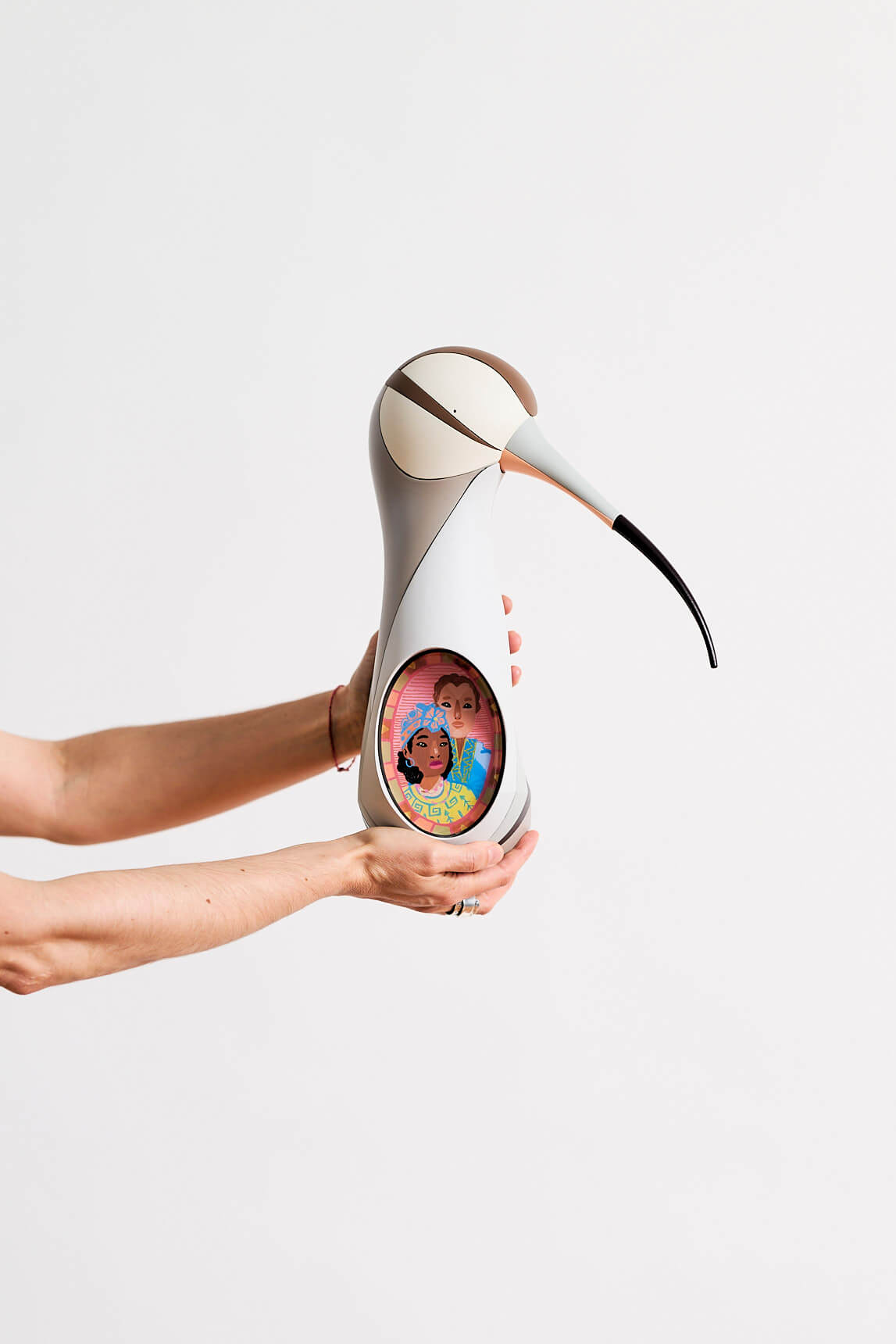
5. Longing – Eastern Curlew (Hand painted 3D print and Acrylic paint on repurposed MDF)
$3,300
In stock
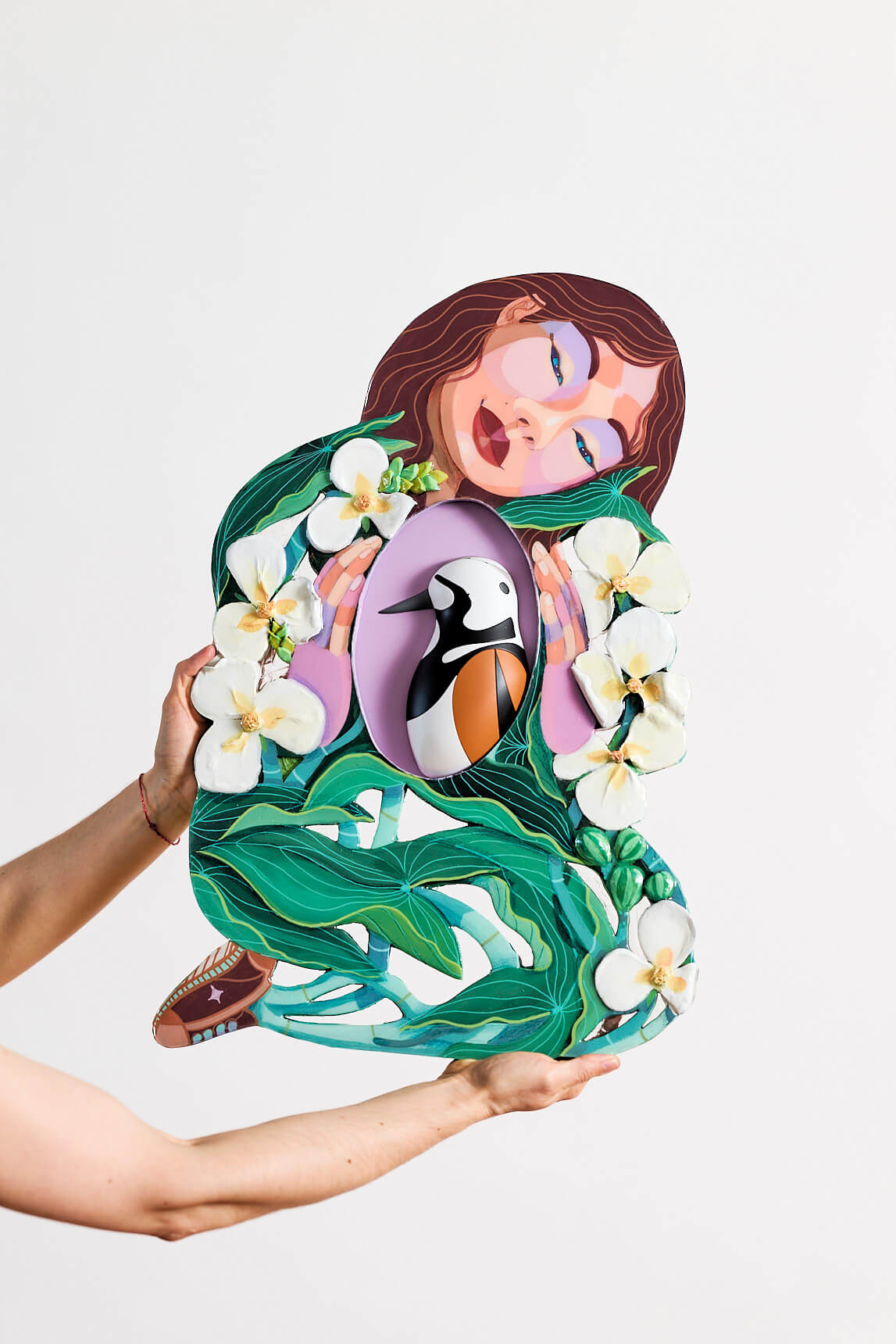
6. Sagittaria Montevidensis – Ruddy Turnstone (Acrylic paint and resin on repurposed MDF and Hand painted 3D print)
$5,000
In stock
For the Birds
Between Home and Horizon
Honouring the Magellanic Plover, journeying along Patagonia’s southern shores, and the Pilpilén, a constant presence in Chilean wetlands.
The endangered Magellanic Plover, with fewer than 500 individuals remaining in the wild, breeds along the wind-exposed shores of shallow, saline lagoons in the Patagonian steppe of southern Argentina and Chile. Once the breeding season concludes, these birds move from these lagoons toward the coast and further north, reaching Bahía Lomas, where large flocks gather in May, before continuing north along the coasts of Santa Cruz Province, Argentina. The small population travels together across the steppe, stopping at intermediate saline lagoons or directly at the coasts of the continent and Tierra del Fuego.
The Pilpilén inhabits the Chilean coast from Arica to Chiloé, residing in wetlands, estuaries, and coastal lagoons. His presence highlights the vital importance of these ecosystems, which provide food, shelter, and breeding grounds for coastal birdlife. Though largely resident, the Pilpilén’s life is closely tied to the rhythms of the wetlands, making him a sentinel species for the health of these habitats.
Latham’s Snipe breed in the northern half of Japan, primarily Hokkaido, the southern half of Sakhalin Island, and the adjacent Russian mainland and Kuril Islands. Individuals begin to arrive in Japan in late March or April, peaking in mid-May, with the last birds arriving in June. Following breeding, the first birds depart Japan in late July, with migration peaking in mid-August, and the last birds leaving by early October.
In Australia, birds show a complementary pattern: the first arrive in August and September, while they begin departing southern Australia in February, with the last leaving northern Australia in May. Very few records exist between their breeding and non-breeding grounds. A few observations have been made in the Philippines and Taiwan, but these are too sparse to determine precise migration routes or stopover sites.
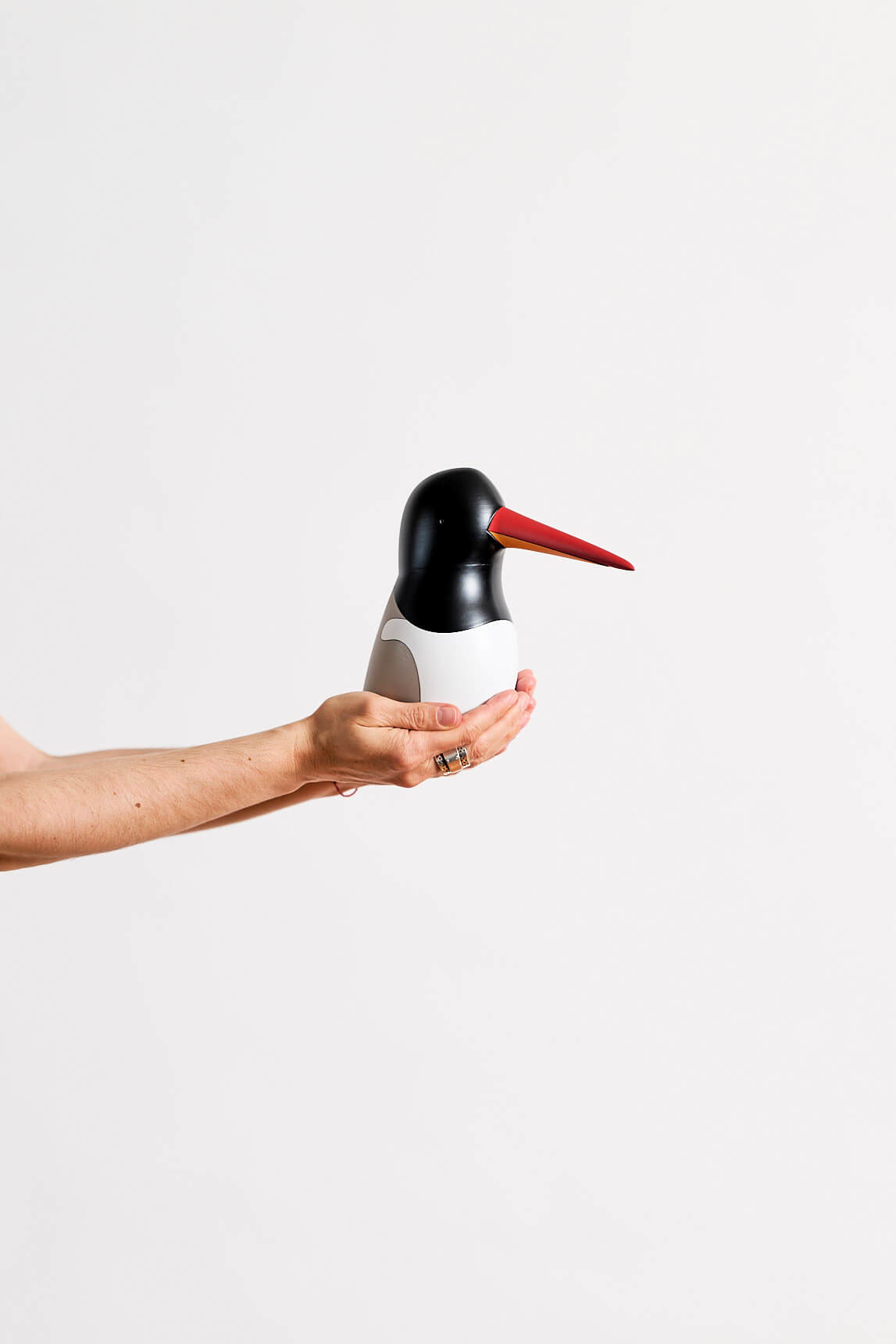
1. Pilpilén (Hand painted 3D print)
$2,500
In stock
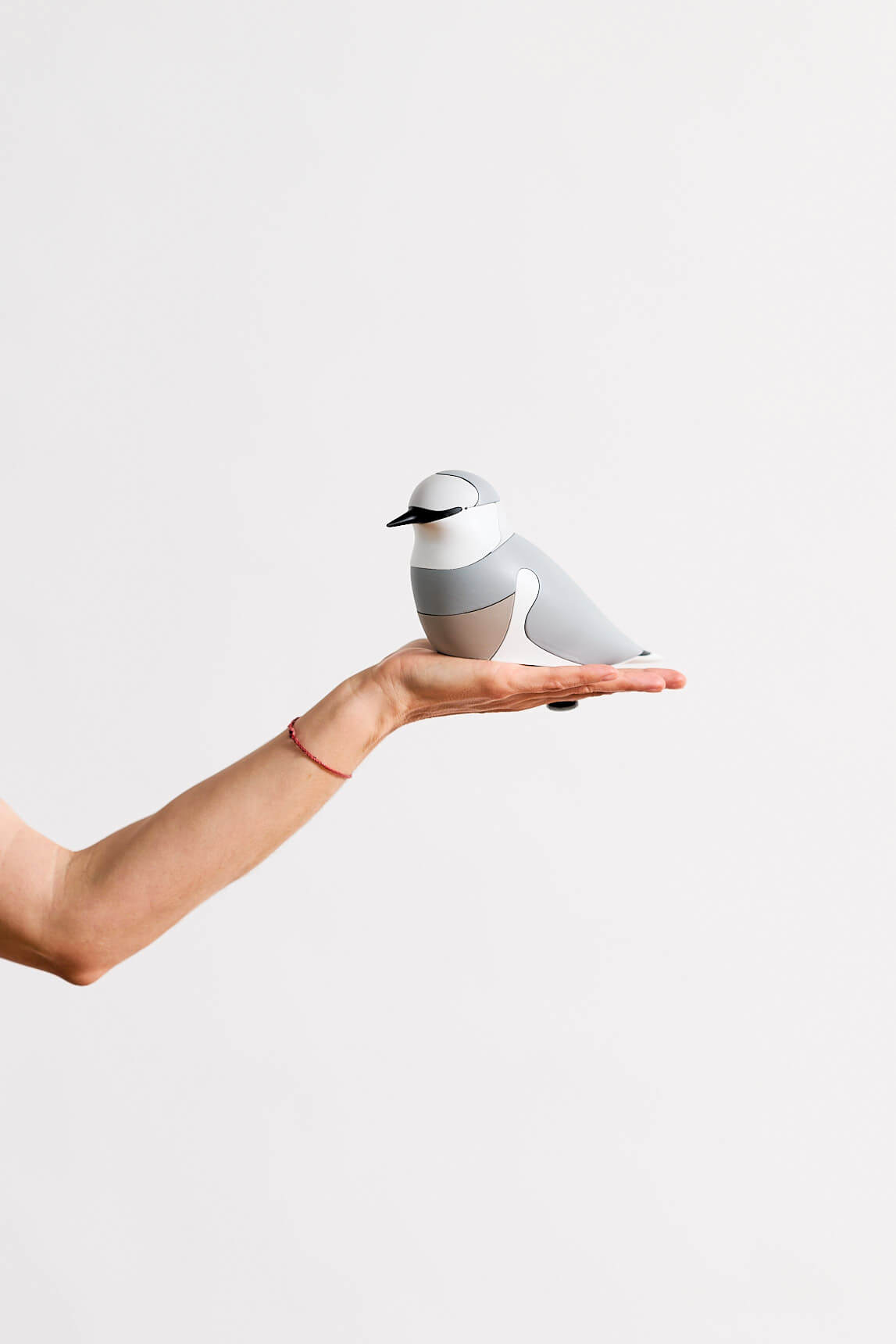
2. Magellanic Plover (Hand painted 3D print)
$2,500
In stock
Read stories of migration
Read the stories of Chilean migrants and migrants from around the world who have made their way to Australia.
Their voices sit alongside the artworks, adding lived experience to the ideas of movement, crossing, and belonging.